

Comparison of Dental Fillings: GIC vs. Composite Fillings
Composite fillings: When you have cavity or decay in tooth, you need dental fillings. There are two popular options are Glass Ionomer Cement (GIC) and Composite Resin.
These dental materials are used to restore decayed or damaged teeth and improve oral health. Let’s see how these type of fillings compare on various parameters.
What are GIC and Composite Fillings?
Glass Ionomer Cement is a dental material made of glass powder and organic acid. It releases fluoride, which can help prevent further decay. GIC is often used for small to medium-sized restorations and non-load-bearing areas.
Composite fillings are a mixture of plastic (acrylic) and fine glass particles mixed with resin. They are tooth-colored, making them an ideal choice for visible tooth restorations. Composite fillings are versatile and suitable for both front and back teeth, ranging from small to large restorations.
Comparing GIC and Composite Fillings
GIC
- Has a translucent appearance.
- May not perfectly match the natural tooth color.
- Generally less esthetically pleasing.
Composite Resin
- Offers excellent esthetics.
- Can be color and shade matched to surrounding teeth.
- Results in a seamless and natural look.
- Highly popular for visible tooth restorations.
GIC
- Reasonably durable material.
- May not last as long as Composite Resin.
- Less suitable for larger restorations with heavy chewing forces.
- Best for areas with minimal stress.
Composite Resin
- Highly durable and robust.
- Can withstand the pressures of regular chewing.
- Ideal for both front and back teeth.
- Provides longer-lasting restorations.
GIC
- Bonds well to the tooth structure.
- Offers good support to the tooth.
- Potentially reduces the risk of fractures.
- Helps in preserving the tooth’s integrity.
Composite Resin
- Requires minimal removal of healthy tooth structure.
- A conservative choice for restoration.
- Preserves more of the natural tooth.
GIC
- Suitable for small to medium-sized cavities.
- Best for areas with low chewing pressure.
- Preferred choice for root caries and small restorations.
Composite Resin
- Versatile and adaptable.
- Used for small to large cavities.
- Suitable for both front and back teeth, even in high-stress areas.
- Offers a comprehensive solution for various sizes.
GIC
- Forms a strong and chemically bonded seal.
- Minimizes the risk of leakage and further decay.
- Reliable bonding prevents secondary caries.
Composite Resin
- Creates a secure mechanical bond with the tooth.
- Provides reliable adhesion and stability.
- Robust bonding ensures a long-lasting restoration.
- Minimal chances of filling failure.
GIC
- Some patients may experience sensitivity.
- Sensitivity often due to fluoride release.
- Usually temporary and improves over time.
Composite Resin
- Typically has a low sensitivity risk.
- Well-tolerated by most individuals.
- Favorable choice for patients with sensitivity concerns.
GIC
- Generally safe and has good biocompatibility.
- Non-toxic nature.
- Suitable for various dental applications.
Composite Resin
- Considered safe and well-tolerated.
- Biocompatible with the body.
- Minimal risk of adverse reactions.
GIC
- More economical option.
- Cost-effective for standard restorations.
- Beneficial for patients seeking budget-friendly treatments.
Composite Resin
- Moderately expensive.
- Higher cost due to superior aesthetics and durability.
- Considered a valuable investment for results.
GIC
- Can be placed relatively quickly and easily.
- Straightforward procedure.
- Convenient for shorter dental appointments.
Composite Resin
- May require more time.
- Involves meticulous layering and curing.
- Detailed process ensures precise results.
GIC
- May wear down over time.
- Vulnerable in areas with heavy chewing forces.
- Wear resistance varies by specific case.
Composite Resin
- Highly resistant to wear.
- Maintains structure under regular chewing.
- Withstands occlusal forces for longevity.
GIC
- More prone to staining.
- May discolor over time.
- Can affect aesthetics of the filling later on.
Composite Resin
- Resistant to staining.
- Preserves color and appearance.
- Ensures long-term aesthetic appeal.
GIC
- Can adapt to the cavity shape.
- May not provide an ideal seal in all cases.
- Sealing capabilities may not be as comprehensive.
Composite Resin
- Excellent adaptability.
- Conforms well to the cavity walls.
- Ensures a tight and precise seal.
GIC
- Easily repaired if damaged.
- Usually does not require replacing the entire filling.
- Convenient for addressing minor issues.
Composite Resin
- Also repairable.
- Allows for targeted fixes when necessary.
- Ensures longevity and cost-effectiveness.
GIC
- Exhibits minimal contraction and expansion.
- Reduces risk of leakage and secondary decay.
- Stability contributes to reliability.
Composite Resin
- Shows minimal contraction and expansion.
- Enhances sealing properties.
- Reduces chance of filling failure.
Frequently Asked Questions (FAQ)
- GIC bonds chemically and releases fluoride.
- Composite bonds mechanically and is stronger.
- Composite gives a natural tooth-like shade match.
- GIC is more affordable but less durable.
- Composite lasts longer and resists staining.
- Center for Dental Implants & Esthetics (Sector 51 & Sector 74).
- Clove Dental (multiple Gurgaon locations).
- Dr. Khosla’s Dental Clinic.
- Dental Park (Ghaziabad).
- Most modern clinics offer both materials depending on case.
- Yes, Composite is significantly stronger.
- Composite lasts 10–15 years with good care.
- GIC lasts 5–10 years, depending on chewing forces.
- Composite suits large or deep cavities better.
- GIC is ideal for low-stress or temporary fillings.
- GIC costs ₹800–₹2,000 per tooth.
- Composite costs ₹1,500–₹3,500 per tooth.
- Composite costs more due to strength and looks.
- Prices vary by cavity size and location.
- Premium 3M/Ivoclar composites may cost extra.
- GIC is preferred for kids due to fluoride release.
- Quick placement time helps younger children.
- Works even when moisture control is difficult.
- Composite is used for visible front teeth.
- Older kids may benefit from Composite durability.
- Composite is the best for molars due to strength.
- Handles heavy chewing forces.
- Resists wear and lasts longer.
- GIC is used only for small low-stress cavities.
- Most Gurgaon dentists prefer Composite for molars.
- Yes, GIC releases fluoride over time.
- Helps prevent new cavities.
- Strengthens tooth enamel.
- Reduces bacteria around the filling.
- Best for children and high-cavity-risk adults.
- GIC takes 20–30 minutes.
- Composite takes 30–60 minutes.
- Composite needs etching, bonding, layering.
- GIC is simpler and faster to place.
- Composite gives better long-term results.
- Yes, both types can be repaired.
- GIC bonds well to old GIC for small repairs.
- Composite repairs need fresh bonding.
- Small chips are quick to fix.
- Large cracks may need full replacement.
- Composite is the best choice for front teeth.
- Matches tooth shade very accurately.
- Looks natural and seamless.
- Does not stain easily.
- GIC is less aesthetic and not ideal for visible areas.
Complete Oral Care Beyond Fillings in Gurgaon
Sometimes a cavity is too deep for a simple filling. When that happens, our MDS specialists offer advanced treatments to save your natural tooth and restore full function.
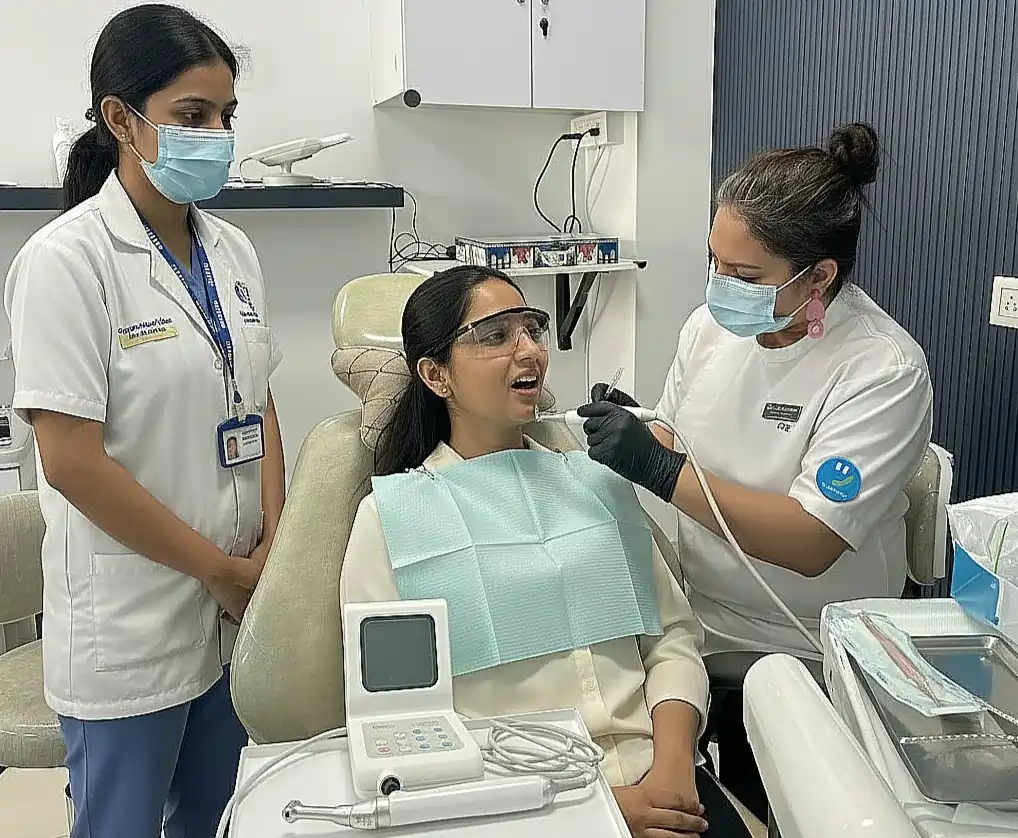
Root Canal Treatment
When decay reaches the nerve, a filling isn’t enough. Our MDS Endodontists perform microscope-assisted Root Canal Treatment in Gurgaon — ideal for patients searching for RCT cost in Gurgaon and painless nerve treatment.
Learn More →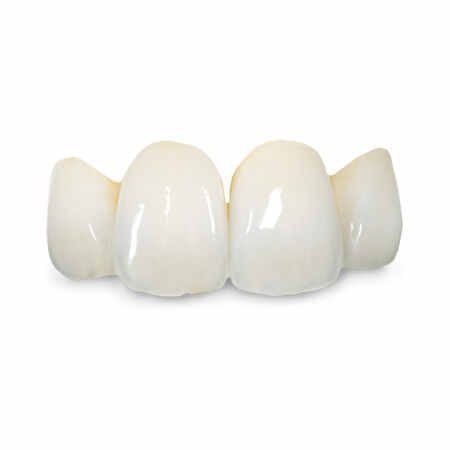
Dental Crowns (Caps)
If more than 50% of your tooth is damaged, a crown is the safest way to reinforce and protect it. We offer Zirconia, E-max, and Premium Esthetic Crowns for long-term strength and natural shine.
View Crown Types →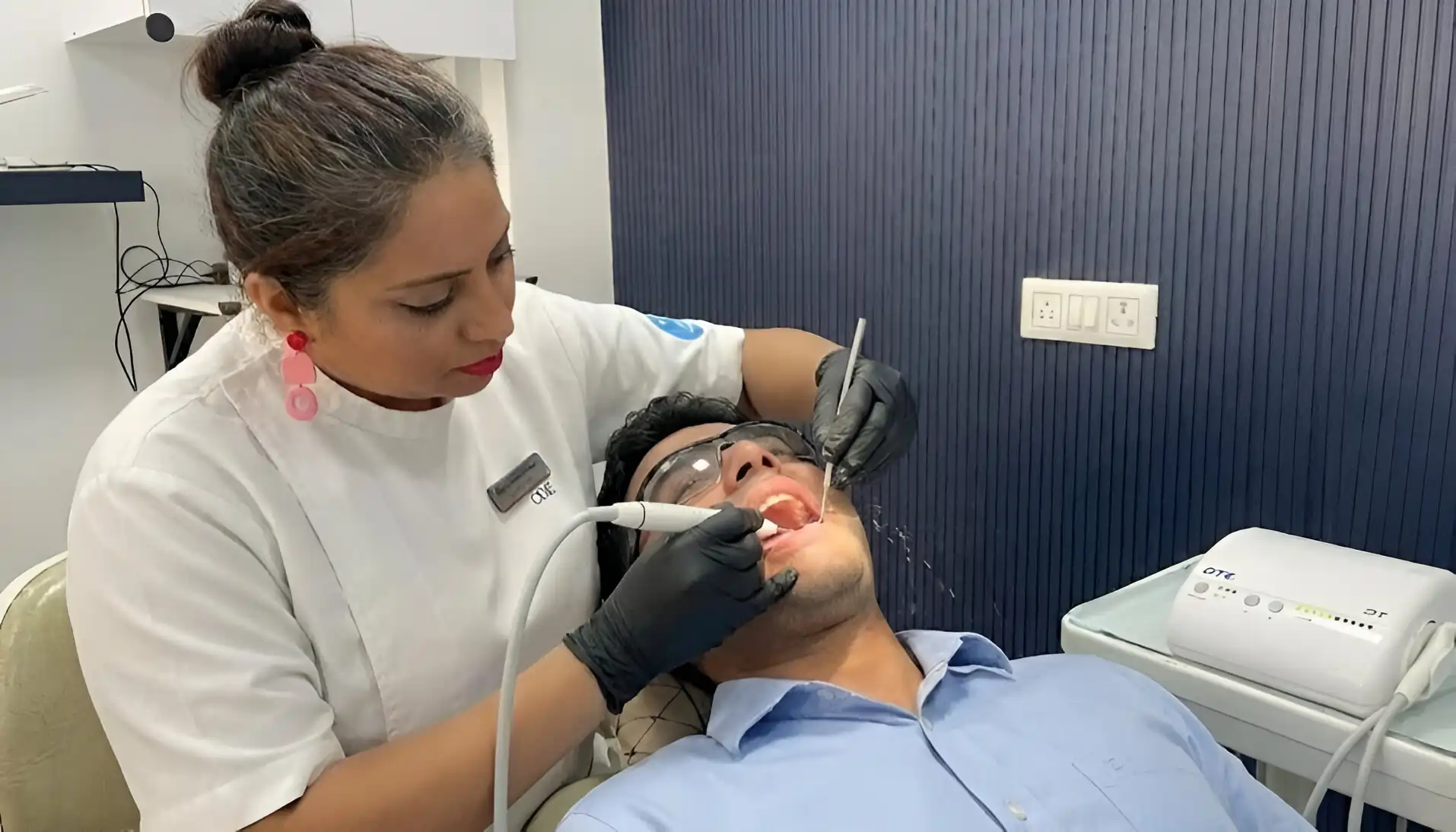
Teeth Whitening & Scaling
Regular cleaning prevents new cavities and gum disease. Our ultrasonic scaling and polishing packages are ideal for patients looking for teeth cleaning in Gurgaon or routine oral maintenance.
See Packages →Serving Your Neighborhood
At Center for Dental Implants & Esthetics, many patients search for dental fillings in Gurgaon, tooth-colored composite fillings near me, and best dentist for cavity treatment in Sector 51 Gurgaon. Our clinic near Artemis Hospital is ideal for residents of Nirvana Country, Mayfield Garden, Sector 45, Sector 46, Sector 50, and South City 1.
For patients in New Gurgaon and Golf Course Extension Road, our Sector 74 branch is the preferred choice for composite fillings in Sector 74, dental cavity treatment near Golf Course Extension Road, and affordable fillings in M3M Cornerwalk. Both clinics follow identical sterilization and 3M/Ivoclar material protocols under Dr. Jyoti Singh (MDS).

Dr. Jyoti Singh (MDS), Diplomate WCOI (Japan region) Member AAID (American Association of Implant Dentistry) stands as a beacon of excellence in implantology within Delhi NCR region. She is a BDS and MDS(Prostho) both from Maulana Azad Institute of Dental Sciences, where she secured top honors with all India rank 1 in PG entrance examination. Her extensive experience at esteemed institutions like Clove Dental and her own Center for Dental Implants & Esthetics since 2016, Dr. Singh embodies unparalleled expertise in dental implants. Boasting a wealth of 17+ years in dentistry and backed by 18 groundbreaking research papers in leading international journals (Google Scholar) and her ResearchGate profile, she epitomizes the pinnacle of proficiency and innovation in her field. She practices in Gurugram as your friendly dentist near me.