Bone Grafting for Dental Implants in Gurgaon — What You Really Need to Know
Many patients are told bone graft is an “extra” procedure. In most implant cases it is not extra — it is essential. At Center for Dental Implants & Esthetics, we never cut this corner.
Book a CBCT Implant ConsultationWhat Is Bone Grafting in Dental Implants?
When a tooth is missing — or when a tooth is removed — the jawbone underneath begins to shrink. This happens within weeks of extraction. In 6 to 12 months, you can lose a significant amount of bone height and width at that site. (Source: Journal of Oral Implantology, 2022)
A dental implant needs solid bone to anchor into — just like a wall plug needs solid wall. If the bone is too thin or too short, the implant has nothing to grip. That is when bone grafting becomes necessary.
Bone grafting simply means adding bone material to your jaw — so your body builds new bone around it. Over 3 to 6 months, this new bone becomes your own. Then the implant goes in, with full support.
Did you know? Studies show that 50–60% of bone volume can be lost in the first year after a tooth is removed if no socket preservation is done. This is why timing matters a lot. (Source: Clinical Oral Implants Research, 2021)
“I Was Told I Don’t Need a Bone Graft.” Are You Sure?
This is one of the most common things patients tell me when they come for a second opinion. Some dentists skip bone grafting to keep the cost low — and the quote competitive. Some simply do not check properly because they are working from an OPG X-ray only.
An OPG (the standard panoramic X-ray) shows a flat 2D picture of your jaw. It gives no information about bone width, the exact shape of the bone, or whether there is enough volume for safe implant placement. A CBCT scan (3D X-ray) shows all of this clearly.
At Center for Dental Implants & Esthetics, we do a mandatory CBCT scan for every implant patient before surgery. This is non-negotiable. We need to see exactly what bone is available — not guess. Skipping this step is the single biggest reason implants fail.
“Bone graft is only for complex cases or old patients. Normal implants don’t need it.”
Immediate implant protocol (placing implant at time of extraction) always requires bone grafting per international implant guidelines. Even in delayed cases, CBCT commonly reveals bone deficiency that needs correction before implant placement.
“If my dentist didn’t mention a bone graft, my bone must be fine.”
Not necessarily. If no CBCT was done, the dentist may simply not know. Many patients have borderline bone that only shows up on a 3D scan. Placing an implant into insufficient bone leads to implant failure — often after a year or two.
“Bone graft is an extra charge the dentist adds to make money.”
Bone graft is a procedure with real material cost and clinical time. When correctly done, it dramatically improves long-term implant success. Skipping it to save ₹3,000–7,000 today can cost you the entire implant (₹25,000–60,000) in 2 years.
Seen a ₹9,999 dental implant offer in Gurgaon? These packages almost always skip the bone graft — and the CBCT scan. Read our investigation into what these offers actually include (and leave out): The Truth Behind ₹9,999 Implant Offers →
Why at Center for Dental Implants & Esthetics We Never Skip This Step
In my 17+ years of placing implants, I have seen what happens when bone grafting is avoided to cut cost. The implant may look fine at first. But bone continues to recede. The implant starts to show at the gum. It gets loose. It fails.
You do an implant only once. That surgery window is precious. The bone graft adds time and some cost — but it gives your implant the best possible chance for a lifetime of use.
- Every immediate implant (placed at time of extraction) gets bone graft — this is the standard of care per implant textbooks
- Every delayed implant site is assessed by CBCT — if bone is borderline, we graft
- We use only US FDA-approved graft materials — Nobel Biocare, RegenOss, Osseograft
- Our protocols follow Diplomate WCOI (Japan Region) standards and Nobel Biocare training
- We do a mandatory blood test panel before surgery — because bone healing depends on your health status
- We have placed 10,000+ implants at our clinics in Gurgaon — we stand by our long-term outcomes
If a dental clinic quotes you for an implant without a CBCT and without mentioning bone graft — ask why. It is a reasonable question, and you deserve a clear answer before you proceed.
Types of Bone Grafts We Use
Not all bone grafts are the same. The type your implantologist chooses depends on how much bone is needed, the site, and your overall health. Here are the four main types:
Autogenous Graft (Your Own Bone)
Bone taken from your own body — usually the chin or lower jaw. Highest success rate. Requires a second surgical site, so it is used when a large volume of bone is needed. Most effective because your body does not reject it.
Allograft (Human Donor Bone)
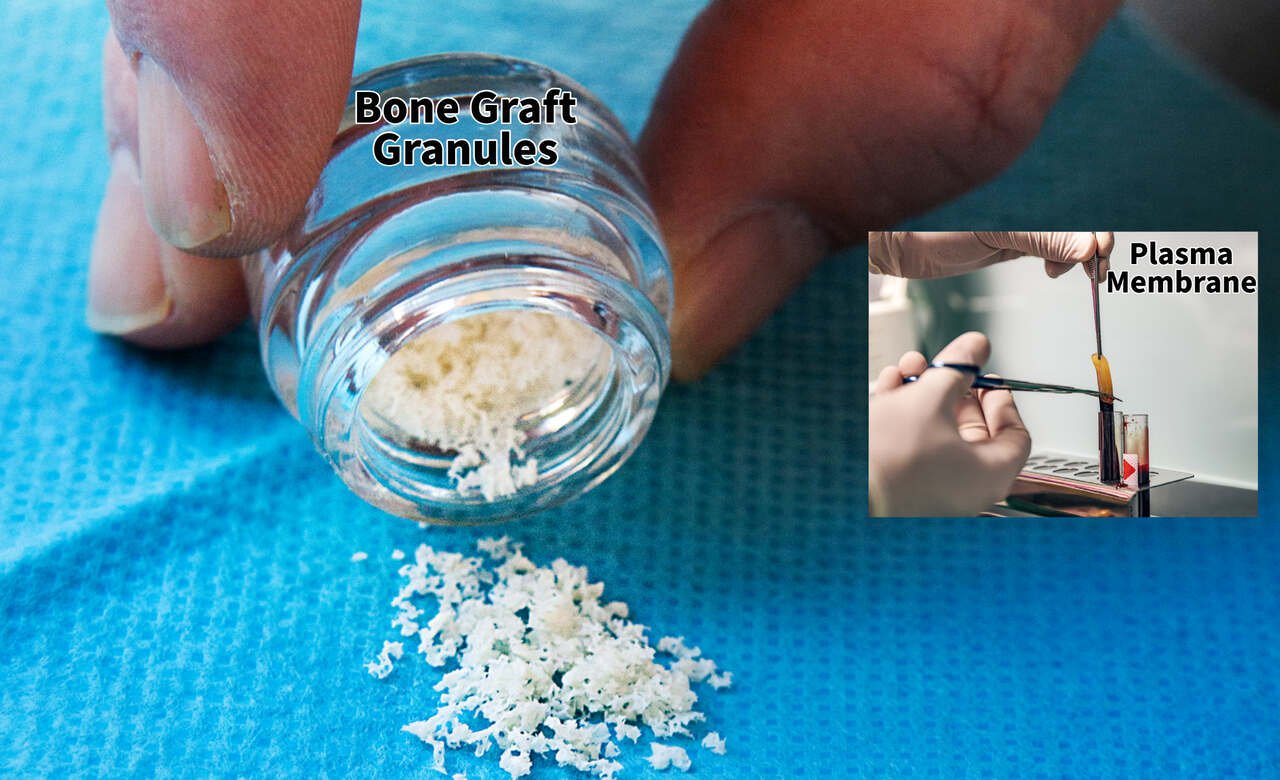
Processed bone from a human tissue bank. All biological material is removed — only the mineral scaffold remains. Your cells use this scaffold to grow new bone. Safe, effective, and avoids a second surgical site. Brand: RegenOss.
Xenograft (Animal-Derived Bone)
Usually from bovine (cow) bone, processed to remove all proteins — only the mineral matrix remains. This acts as a scaffold for your bone cells to grow into. Very predictable results. Brand: Osseograft.
Synthetic Bone Graft
Made from materials like hydroxyapatite or calcium phosphate — minerals that mimic natural bone. No animal or human source. Good for smaller defects. Fully biocompatible. Brand: Osstem.
The choice of graft material is made by your implantologist after reviewing your CBCT scan, medical history, and the specific bone defect. You do not need to decide this — we explain it to you in simple terms during consultation.
The Different Bone Graft Procedures — Explained Simply
Different situations need different approaches. Here are the main procedures we perform:
Socket Preservation (Alveolar Ridge Preservation)
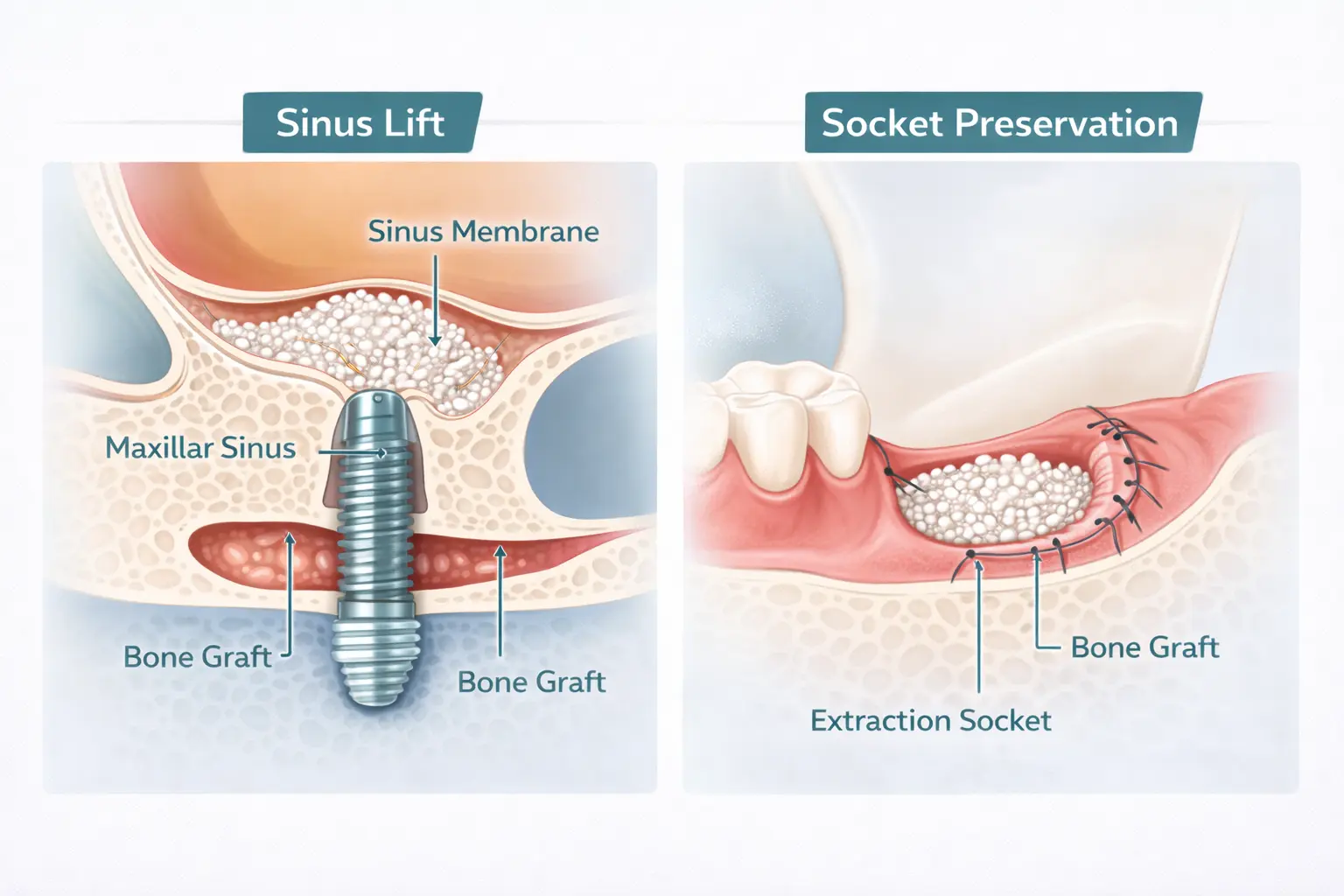
When a tooth is extracted and an implant will be placed later (delayed implant), we fill the empty socket with graft material immediately after extraction. This prevents the bone from collapsing inward. You come back in 3–4 months when the bone has healed, and then the implant goes in. This is the most common and least invasive graft procedure.
Simultaneous Grafting with Immediate Implant
When the implant is placed on the same day as extraction, there is always a gap between the implant surface and the socket wall. This gap must be filled with bone graft. This is standard protocol — not optional. It helps the implant integrate properly and protects the shape of your gum line. Think of it like filling the gap in a wall plug with cement.
GBR — Guided Bone Regeneration
When there is significant bone loss — the ridge is too narrow or too short — we use GBR. Bone graft material is placed on the deficient area and covered with a special membrane. This membrane stops soft tissue from growing into the graft site, allowing only bone to grow. It is a more involved procedure but gives excellent, predictable results.
Sinus Lift (Sinus Augmentation)
The back teeth of your upper jaw sit very close to the sinus cavity. When these teeth have been missing for a while, the sinus floor drops down and the bone becomes too thin for an implant. A sinus lift raises the sinus membrane and packs bone graft underneath it. This is a well-established procedure with very high success rates when done correctly. See our detailed guide on dental implants in Gurgaon for more on upper jaw implants.
Block Bone Graft
In cases of severe bone loss, a solid block of bone is harvested from another area (usually your lower jaw or chin) and screwed in place at the implant site. This is the most invasive graft procedure. It is used when a large volume of bone is needed and other graft types are insufficient. Healing takes 4–6 months before implant placement.
Bone Graft Cost in Gurgaon — An Overview
Cost depends on the type of graft material used and the complexity of the procedure. This is a general guide. For a precise cost, a CBCT evaluation and consultation is needed.
| Type of Graft | Approx. Cost (INR) | Use Case | Invasiveness |
|---|---|---|---|
| Autograft (own bone) | ₹18,000 – ₹25,000 | Large bone defects, block grafts | High (2 surgical sites) |
| Allograft (human donor) | ₹6,000 – ₹9,000 | Socket preservation, GBR | Low |
| Xenograft (bovine) | ₹3,000 – ₹5,500 | Immediate implant gaps, small defects | Low |
| Synthetic (HA/calcium phosphate) | ₹7,000 – ₹10,000 | Small defects, GBR | Very Low |
| Sinus Lift Procedure | ₹25,000 – ₹45,000 | Upper back jaw implants | Moderate–High |
Prices are indicative and may vary based on clinical requirement. Final cost is given after CBCT evaluation. For detailed bone graft pricing, see our bone graft cost page.
Important: The choice of graft type is a clinical decision — made by your implantologist based on your CBCT scan and bone condition. It is never a cost-cutting decision at our clinic.
Recovery After Bone Grafting — What to Expect
Recovery from a simple bone graft (socket preservation or simultaneous graft) is usually gentle. A more involved procedure like sinus lift or block graft takes longer. Here is a realistic timeline:
| Timeframe | What Happens | What You Should Do |
|---|---|---|
| Day 1–3 | Some swelling, mild discomfort, minor bleeding is normal | Cold compress, prescribed medicines, soft diet, no spitting |
| Day 4–14 | Swelling reduces, initial clot forms over graft site | Gentle brushing, avoid hard/crunchy food, no smoking |
| Week 2–8 | New blood vessels grow into graft, body begins building bone | Attend follow-up, maintain gentle oral hygiene |
| 3–6 months | Graft material is replaced by your own new bone | Follow-up CBCT taken to confirm bone volume |
| After bone confirmed | Implant placement is scheduled | Final implant surgery proceeds |
Key Recovery Rules
- No smoking for at least 3 weeks — nicotine starves the graft of blood flow and is the single biggest cause of graft failure
- Avoid hard, crunchy, or chewy food at the graft site
- Do not probe or touch the site with your tongue or finger
- Take all prescribed antibiotics for the full course
- Sinus lift patients: do not blow your nose for 2–3 weeks; sneeze with your mouth open
- Attend all follow-up appointments — this is where we catch any early issue
Are There Risks? Yes — Here Is the Truth
Bone grafting is a well-established surgical procedure with a very high success rate when done correctly. But like any surgery, it carries some risks. I believe in being transparent with my patients about this.
- Infection — Risk is low when sterile protocols are followed and antibiotics are taken. We maintain strict sterilisation standards at both clinic locations.
- Graft not integrating — Rare, but more common in smokers, diabetics with poor sugar control, or when post-op instructions are not followed.
- Swelling and temporary discomfort — Expected with any oral surgery. Usually resolves in 5–10 days.
- Sinus complications (sinus lift only) — If the sinus membrane is perforated during the procedure, it can cause sinus infection or graft failure. This is why operator experience matters enormously.
- Nerve tingling (block graft from chin) — Temporary numbness can occur when bone is taken from the chin area. This almost always resolves on its own.
In my clinical experience with 10,000+ implants placed over 17 years, the overwhelming majority of graft complications come from two things: patient smoking and not following post-op instructions. We discuss this openly with every patient before surgery.
Who Will Do Your Bone Graft in Gurgaon?
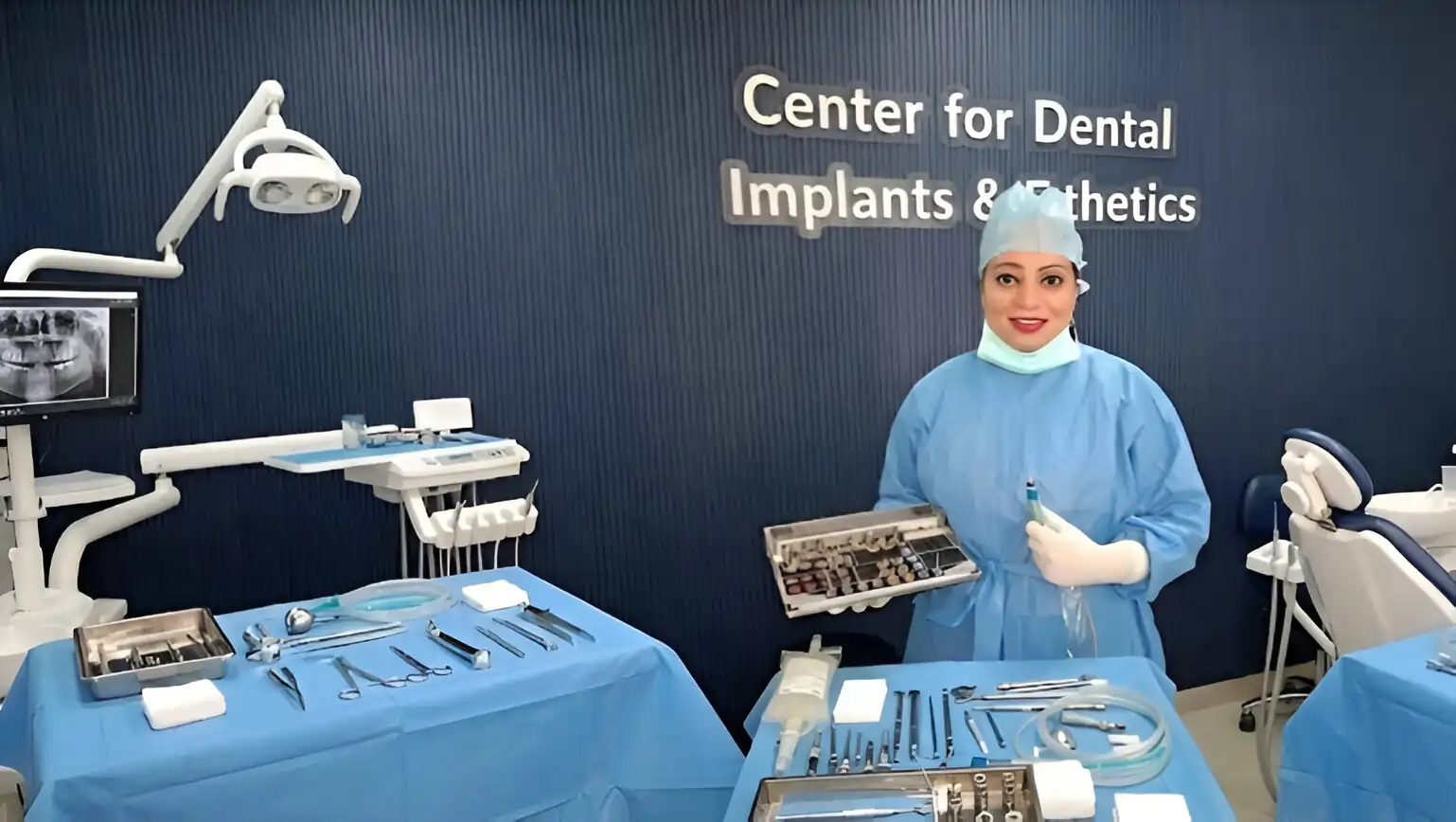
Bone grafting — especially sinus lift and block grafting — requires advanced surgical training. It is not a procedure every general dentist is qualified to perform. At Center for Dental Implants & Esthetics, all complex graft procedures are performed or directly supervised by our implant specialist.

Dr. Jyoti Singh — Implantologist, Center for Dental Implants & Esthetics
MDS from Maulana Azad Institute of Dental Sciences (MAIDS), New Delhi. 17+ years of clinical implant experience. Has placed 10,000+ dental implants in Delhi NCR.
Diplomate, World Congress of Oral Implantologists (WCOI — Japan Region) • Nobel Biocare Trained Implantologist • Invisalign Certified
All implant cases use strict CBCT protocol and US FDA-approved implant and graft systems. Mandatory pre-surgical blood panel for every patient.
Frequently Asked Questions
The procedure itself is done under local anaesthesia — you will feel no pain during surgery. After the anaesthesia wears off, there is mild to moderate soreness for 2–4 days, which is managed easily with prescribed pain medication. Most patients say it is much less uncomfortable than they expected.
For simple socket preservation or simultaneous grafting with an immediate implant, no extra waiting time is needed for the graft itself. For GBR or sinus lift, you typically wait 3–6 months for the new bone to form before implant placement. Your CBCT at follow-up confirms when the bone is ready.
Not always — but more often than most patients are told. Immediate implants (placed at time of tooth removal) always need bone grafting as per standard implant protocol. Delayed implants need grafting if CBCT shows insufficient bone volume. The only way to know for certain is a proper CBCT evaluation before surgery.
The implant may integrate initially but is at much higher risk of failure. Over 1–3 years, bone continues to recede around an inadequately supported implant. The implant becomes exposed, loose, and eventually fails. Correcting a failed implant is far more expensive and complex than doing it right the first time.
Yes. Allograft material used in dentistry is sourced from certified tissue banks and undergoes rigorous processing — all living cells are removed, only the mineral scaffold remains. There is no risk of disease transmission when FDA/CE-certified graft materials are used. We only use approved graft materials at our clinic.
When performed by a trained implantologist with proper materials and protocols, bone graft success rates are very high — typically 90–95% for standard grafts and 85–92% for sinus lifts. (Source: International Journal of Oral & Maxillofacial Implants, 2023.) Non-smokers with good health have the best outcomes.
Yes — but only when your blood sugar is under good control. We run a mandatory blood panel before surgery, which includes HbA1c for diabetic patients. If your diabetes is well managed (HbA1c below 7–7.5%), bone grafting and implants can proceed safely with appropriate monitoring. We will not proceed if levels are dangerously high.
A basic xenograft or allograft for socket preservation or simultaneous implant grafting typically costs ₹3,000–₹9,000. A sinus lift costs ₹25,000–₹45,000 depending on complexity. An autograft block graft can be ₹18,000–₹25,000. For a detailed cost breakdown, see our bone graft cost page. Exact pricing is given after your CBCT consultation.
Osteoporosis affects bone density throughout your body, including your jaw. It does not automatically disqualify you from implants, but it does require careful assessment. Patients on bisphosphonate medications (for osteoporosis) need special evaluation before bone grafting or implant surgery. We assess this during your consultation and blood work review.
Come in for a CBCT evaluation. We can assess how the implant is integrating and whether the bone around it is adequate. If there is a problem forming, early intervention gives the best chance of saving the implant. Do not wait until you feel pain — by then, significant bone loss may have already occurred. You can book a consultation online or call us directly.
Not Sure If You Need a Bone Graft? Let’s Find Out.
Book a CBCT implant consultation at either of our Gurgaon clinics. We will give you an honest, detailed assessment — no guesswork, no shortcuts.
Clinic — Sector 51
Center for Dental Implants & Esthetics
#166, Sector 51, Ambedkar Chowk
Close to Artemis Hospital, Gurgaon 122003
Clinic — Sector 74
Center for Dental Implants & Esthetics
R1 – 257, 2nd Floor, M3M Cornerwalk
Sector 74, Gurugram 122004
Can You Get Implants with Bone Loss?
Many patients with bone loss are told implants are not possible. That is often not true anymore. See what options exist.
Read: Implants with Bone Loss →How Implants Stop Jaw Bone Loss
Understand why missing teeth cause bone to disappear — and why dental implants are the only solution that prevents this from continuing.
Read: Implants & Bone Loss →Bone Graft Cost in Gurgaon
A full breakdown of graft costs by type and procedure. Understand what you are being quoted and why the price varies.
Read: Bone Graft Costs →