
How Do I Know If I Need a Root Canal?
Some signs are loud. Some are completely silent. Both can be serious. Know what to look for — before it gets worse and far more expensive to treat.Most of the time, it is not fine. Pain stopping usually means the nerve inside the tooth has died. The infection is still there. It has just stopped sending you signals. Think of it like a fire alarm going silent — not because the fire went out, but because the battery died.
1. Common Signs You May Need a Root Canal
These are signs the infection has gone deep — into the pulp. The pulp is the soft living tissue and nerve inside your tooth. Once infected, a filling will not fix this.
Gets worse when you lie down. Not a normal ache. The nerve is under pressure from active infection below your gum line.
Even soft food causes sharp pain. Infection has likely spread from the root into the surrounding bone.
Normal sensitivity fades in 2–3 seconds. Pain that lingers longer means nerve damage — not just irritation.
A bump near a specific tooth is pus draining from an abscess. This needs same-day attention — not next week.
Tooth infection pain travels. Many patients mistake this for a sinus problem or ear infection and take the wrong medicine for months.
Darkening means the nerve has already died. The tooth may feel completely fine — but infection is still active inside the root.
Normal sensitivity = fades within 2–3 seconds after hot or cold food
Nerve damage = pain stays 30+ seconds — sometimes lingers for several minutes
For the full breakdown of every symptom and how urgent each one is: Complete Root Canal Symptoms Guide →
2. Symptoms Patients in Gurgaon Ignore — But Shouldn’t
These signs are easy to explain away. In my 17+ years of practice at Center for Dental Implants & Esthetics, patients who ignore these are the ones who return needing extraction instead of a root canal. A tooth saved for ₹4,000–8,000 today costs ₹40,000+ to replace with an implant later.
- Swelling near a tooth or on the jaw — always urgent. Do not wait for pain. Facial swelling from a dental abscess can spread to the neck and become life-threatening.
- Bad taste or smell from one specific spot — pus draining from an abscess. It may come and go. The infection is not healing on its own.
- Tooth cracked after biting something hard — a crack gives bacteria a direct path to the nerve. Even a hairline crack is dangerous.
- Old, large filling in the same tooth for many years — old fillings leak slowly. Bacteria silently reach the pulp over time with no warning until it is too late.
- Tooth that was injured — even years ago — a sports hit or a childhood fall. The nerve can die months or years later with no warning at all.
- Same tooth drilled multiple times over the years — every drilling stresses the nerve. By the third or fourth filling, root canal may become unavoidable.
- A permanent tooth feeling slightly loose with no clear reason — bone infection spreading around the root can cause this. It is not normal in adults.
From the clinic: We regularly see patients at our Sector 51 and Sector 74 clinics with a tooth injured in school — sometimes 10 to 15 years ago. No pain for years. Then the tooth quietly dies. If you ever injured a tooth, always get it X-rayed at your next visit — even if it feels completely fine.
3. How Dentists Confirm You Need Root Canal
A good dentist never guesses. At Center for Dental Implants & Esthetics, we follow a strict protocol before making any recommendation. Here is exactly what we check during your appointment.
| Test | What We Check | What It Tells Us |
|---|---|---|
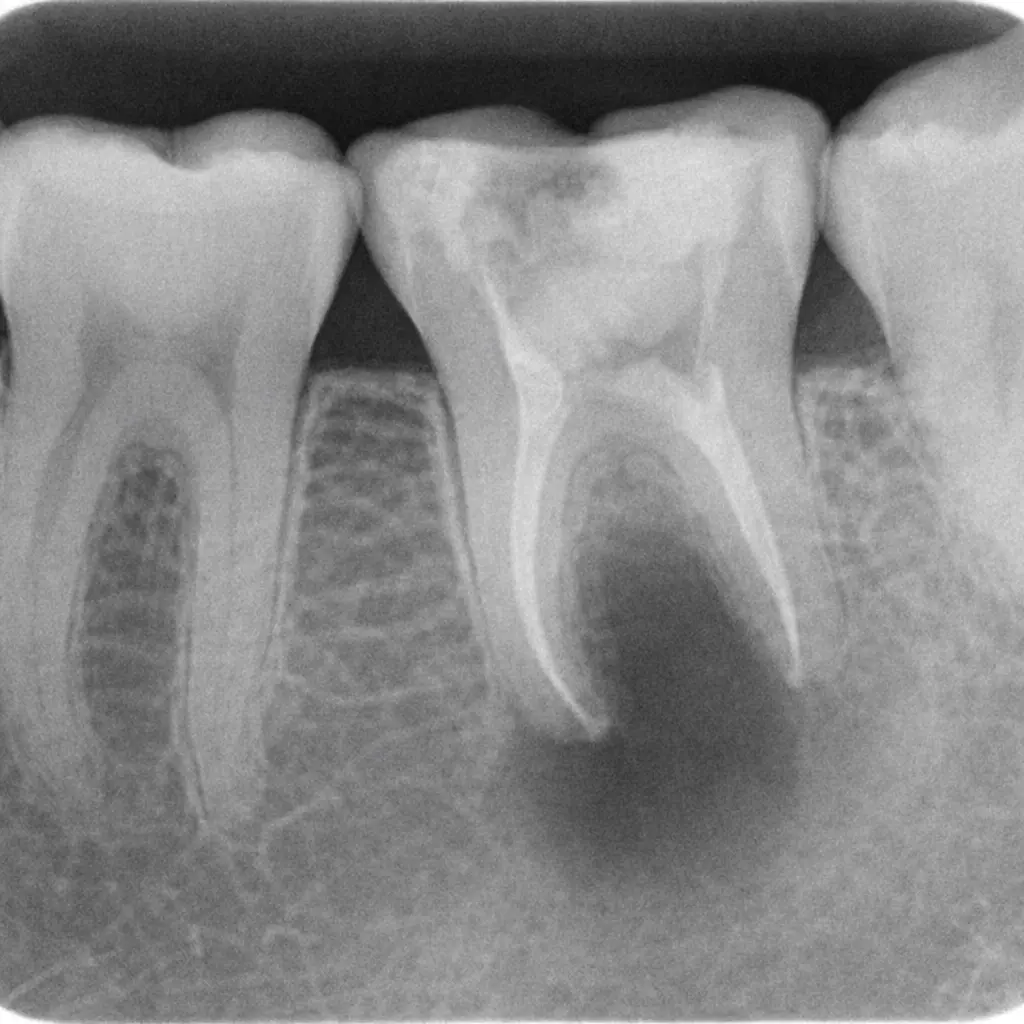
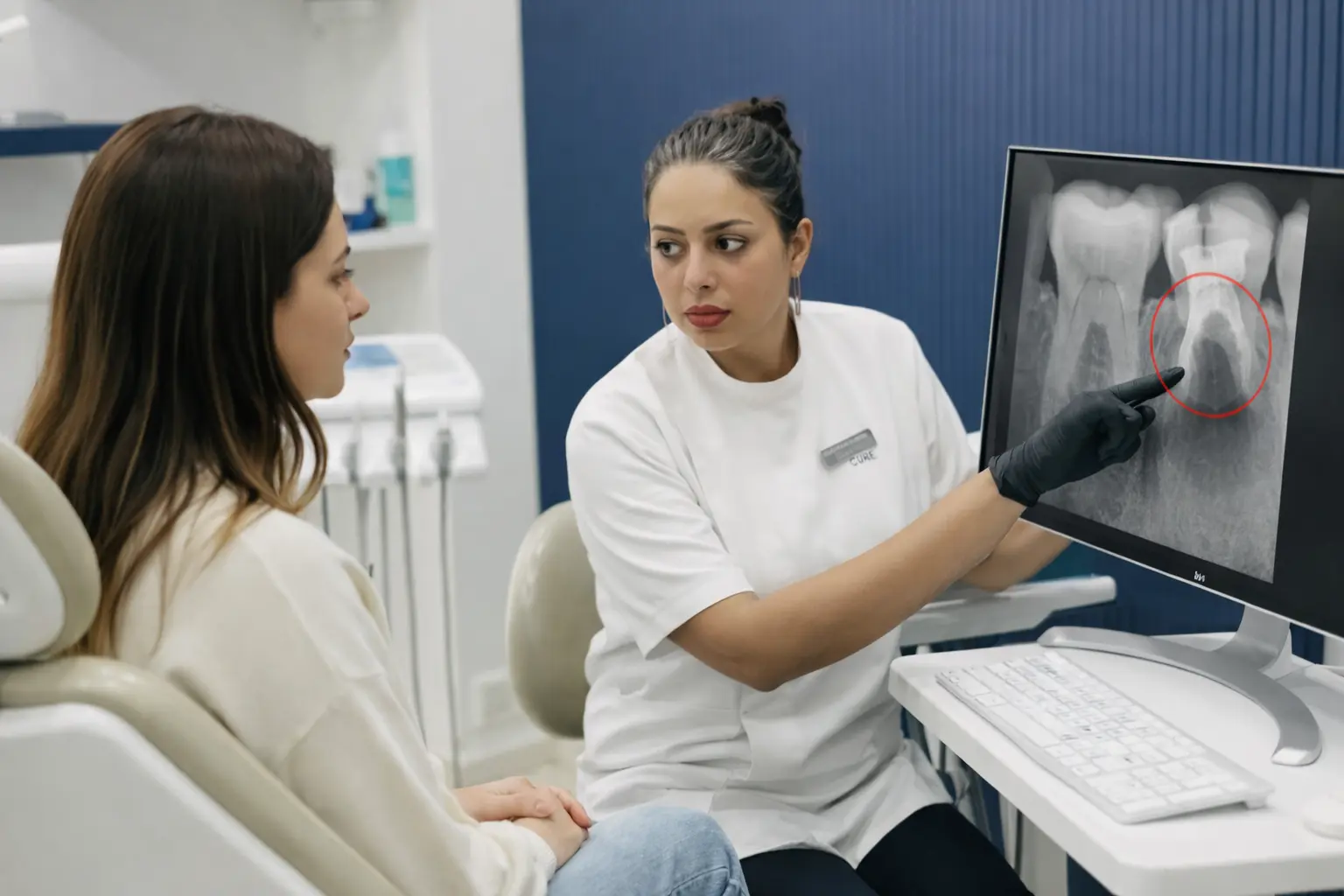
| Dental X-ray (IOPA) | Root + surrounding bone | Dark shadow at root tip = bone infection confirmed |
| Cold test | Nerve response to cold stimulus | Is the nerve alive, inflamed, or already dead? |
| Heat test | Pain response to warm stimulus | Irreversible pulpitis — nerve too damaged to recover |
| Percussion (gentle tapping) | Pain when tapping the tooth | Infection has spread from tooth into surrounding bone |
| Palpation (pressing the gum) | Tenderness in gum or jaw | Active abscess or spreading infection in the jaw |
| CBCT 3D scan | Full 3D view of roots and bone | Hidden canals, exact infection size, fracture detection |
“In my clinical experience, a tooth that needs root canal today — treated today — has a 90 to 95% success rate. That same tooth left three months longer may need extraction instead. Every week of delay gives the infection more space to grow into the jawbone.”
Dr. Jyoti Singh | MDS Endodontics, MAIDS New Delhi | 17+ Years | 10,000+ Procedures | Center for Dental Implants & Esthetics, Gurgaon4. Can a Dentist Confirm Without an X-Ray?
- Clinical tests and symptoms can strongly suggest root canal is needed
- But an X-ray is always required to properly confirm the diagnosis
- The X-ray shows a dark shadow at the root tip — this is bone being destroyed by infection
- This shadow is often present even when the tooth feels absolutely no pain
- Without the X-ray, bone infection cannot be confirmed or ruled out
- For complex cases at our Gurgaon clinics, we use CBCT 3D imaging where standard X-ray is not enough
“No pain means no infection. My tooth must be fine.”
A dead nerve cannot send pain signals. Bone infection stays active and is clearly visible on X-ray even when the tooth feels completely normal.
“If I needed a root canal, it would hurt badly.”
Many patients with confirmed bone infection on X-ray have zero pain. The nerve dying is what stops the signal — not the infection clearing up.
5. The Pain Stopped On Its Own — Do I Still Need Treatment?
Short answer: Yes. In most cases, absolutely yes.
Pain stopping on its own is not recovery. It is almost always nerve death. The infection is still there — and now growing silently into the bone without warning you.
Here is what actually happens when tooth pain suddenly disappears:
- Bacteria enter the pulp — the nerve and blood vessels inside the tooth
- Pressure builds inside the root — this intense pressure is what causes the pain
- As infection continues, the nerve tissue dies from loss of blood supply
- A dead nerve cannot feel pain — so the tooth goes silent
- Bacteria do not die — they push through the root tip into the jawbone
- Bone breaks down slowly — a cyst or abscess can form — sometimes for years with no symptoms at all
The smoke alarm stopped ringing — not because the fire went out — but because the battery died. The fire is still burning inside.
A painless tooth with bone infection visible on X-ray still needs root canal treatment — often urgently.
All Root Canal Warning Signs → Why Re-Root Canal Is Needed →
6. When Is a Filling Enough — and When Is Root Canal Needed?
“Doctor, can you not just put a filling?” — This is the most common question I hear. The answer depends entirely on how deep the damage has gone inside the tooth.
🔝 Pulp not touched? A quality composite or GIC filling is all you need. Simple, affordable, done in one visit.
🔝 Pulp involved? A filling alone will not work. Bacteria keep growing. The infection returns — worse than before — and you may lose the tooth entirely.
🔝 After root canal? The tooth also needs a dental crown (cap). Without it the treated tooth is brittle and can split under normal biting.
Alternatives to Root Canal → Painless RCT in Gurgaon → Root Canal Cost in Gurgaon →
7. What Actually Happens During Root Canal Treatment
Most patients are anxious because they do not know what to expect. Here is the whole procedure in plain steps — no jargon.
Local anaesthesia is given first. The tooth and surrounding area go completely numb. You will feel pressure but no pain. Most patients are genuinely surprised at how comfortable it is.
A small opening is made on top of the tooth. Tiny flexible instruments called files are used to clean out the infected pulp tissue from each canal inside the root.
Canals are shaped and thoroughly disinfected using irrigation solutions. An X-ray is taken mid-procedure to verify the depth and accuracy of cleaning.
The cleaned canals are sealed with a rubber-like material called gutta-percha. This permanently blocks bacteria from re-entering the root.
A dental crown is placed at the next appointment. The crown protects the tooth for life. Without it, the treated tooth is brittle and can split under normal biting pressure.
Simple case: 1–2 appointments | 45–75 minutes each
Complex roots or large bone infection: 2–3 visits with medicated dressing placed between appointments
Crown appointment: Separate visit after healing is confirmed — usually 1–2 weeks later
Not Sure If You Need a Root Canal?
Come in for a proper check. We take an X-ray, test the tooth, and give you an honest answer. No pressure. No unnecessary treatment recommended.Sector 51 Clinic
Center for Dental Implants & Esthetics
#166, Sector 51, Ambedkar Chowk
Near Artemis Hospital, Gurgaon 122003
Sector 74 Clinic
Center for Dental Implants & Esthetics
R1-257, 2nd Floor, M3M Cornerwalk
Sector 74, Gurugram 122004
Frequently Asked Questions
Questions we hear most from patients in Gurgaon before their root canal appointment.
A filling is likely enough if: pain fades quickly after sweets or cold, the X-ray shows no bone infection, and the cavity has not reached the nerve.
Root canal is likely needed if: you have deep throbbing pain especially at night, sensitivity lasting 30+ seconds, or pain when biting. An X-ray is the only way to be certain. Never self-diagnose on pain alone.
Yes — sometimes. If the cavity is small and the nerve is untouched, a filling saves the tooth completely. Faster, cheaper, and simpler for you.
Once infection reaches the pulp, root canal becomes unavoidable. Every week of delay gives the infection more time to destroy surrounding bone.
- Done under proper local anaesthesia — not painful during the procedure
- Most patients are surprised — they expected far worse
- Mild soreness for 2–3 days after — settles with standard pain medicine
- The pain of an untreated abscess is consistently far worse than the procedure itself
Yes — almost always. When severe tooth pain suddenly disappears, it almost always means the nerve has died — not that the tooth has healed. The infection is still active in the root and bone.
- Come in for an X-ray — do not assume the tooth has recovered
- Dental infections do not resolve on their own
- Ignoring this leads to large abscesses, bone loss, or permanent loss of the tooth
A dentist can strongly suspect root canal is needed from clinical tests. But an X-ray is always required to confirm. It shows bone infection at the root tip — which does not always cause pain. Without it, this cannot be confirmed or ruled out.
- Bone around the root keeps breaking down — silently and progressively
- A small abscess becomes a large one requiring surgical drainage
- Infection can spread to jaw, neck, or face — a medical emergency
- A tooth that could have been saved now needs extraction
- Replacing it with a dental implant costs far more than treating it early
A small bump near a specific tooth is called a sinus tract. It means there is an active abscess inside the jawbone draining pus through the gum.
- Needs urgent treatment — do not wait for severe pain to develop
- The fact it is not very painful just means the pus is draining — not healing
- The underlying infection continues to destroy bone until treated
- Simple case: 1–2 appointments | 45–75 minutes each
- Complex roots or large infection: 2–3 visits with medicated dressing between appointments
- Crown fitting: Separate appointment after healing is confirmed — usually 1–2 weeks later
For cost details: Root canal treatment cost in Gurgaon
- Studies report 85–95% long-term success with proper technique (American Association of Endodontists)
- A treated tooth with a well-fitted crown can last a lifetime
- Success rates are much higher when treatment is done early, before bone loss becomes extensive
- At Center for Dental Implants & Esthetics, Dr. Jyoti Singh uses rotary instruments and CBCT imaging for complex cases
A previously treated tooth can become re-infected. This is more common than most patients realise.
- Original canal cleaning was incomplete — a missed canal left untreated
- The crown on top leaked over time or broke, letting bacteria back in
- The tooth developed a new crack providing a fresh entry point for bacteria
In many cases the tooth can be retreated successfully. Read: Why re-root canal treatment is needed | Re-RCT in Gurgaon
You May Also Want to Read
Root Canal Symptoms — The Complete Warning Signs Guide
The main cluster guide. Every symptom explained — what it means, how urgent it is, and exactly what to do next. Start here for the full picture.
Read the complete guide →8 Myths About Root Canal Treatment
Most of what patients fear about root canal is simply not true. This post separates fact from fear so you can make a calm, informed decision.
Read now →Why a Crown After Root Canal Is Not Optional
Root canal saves the tooth. A crown protects it for life. Skipping the crown is one of the most common — and costly — mistakes patients make after treatment.
Read now →
Dr. Jyoti Singh (MDS), Diplomate WCOI (Japan region) Member AAID (American Association of Implant Dentistry) stands as a beacon of excellence in implantology within Delhi NCR region. She is a BDS and MDS(Prostho) both from Maulana Azad Institute of Dental Sciences, where she secured top honors with all India rank 1 in PG entrance examination. Her extensive experience at esteemed institutions like Clove Dental and her own Center for Dental Implants & Esthetics since 2016, Dr. Singh embodies unparalleled expertise in dental implants. Boasting a wealth of 17+ years in dentistry and backed by 18 groundbreaking research papers in leading international journals (Google Scholar) and her ResearchGate profile, she epitomizes the pinnacle of proficiency and innovation in her field. She practices in Gurugram as your friendly dentist near me.