Are Indian Aligners
as Good as Invisalign?
A Clinical, Economic & Biological Reality Check — Center for Dental Implants & Esthetics, Gurgaon
The question sounds simple. “Why pay ₹2.5–4 lakhs for Invisalign when an Indian aligner costs ₹50,000–1.2 lakhs?” But this question contains a hidden assumption — that aligners are a product you buy. They are not.
Let's unpack this properly.
What You Are Actually Comparing
Invisalign is a brand by Align Technology. "Indian aligners" is a category — covering brands like Toothsi (makeO), 32 Watts, Dezy, Illusion, Flash, Novoalign, and others. A full comparison of aligner brands available in India may help you see where each sits.
Each operates at a different level of material quality, planning software, and supervision model. Grouping them as one entity is like asking: are all Indian cars as good as Mercedes? It depends on which model, and for what purpose.
The Material Science: SmartTrack vs PETG
Invisalign introduced SmartTrack® — a proprietary multi-layer thermoplastic polyurethane — in 2013. Research confirms it delivers more consistent force over a 14-day wear cycle, better elastic memory, and measurably superior rotational control.
Most Indian brands use medical-grade PETG or standard TPU — the same material Invisalign used before 2013, and still widely used by mid-tier global systems including ClearCorrect.
| Factor | SmartTrack® | PETG / Standard TPU |
|---|---|---|
| Force retention | Consistent over 14 days | Gradual force decay |
| Elastic memory | High | Moderate |
| Transparency | Good | Excellent |
| Stain resistance | Lower (coffee, tea) | Better in published tests |
| Rotation control | Measurable advantage | Adequate for mild cases |
Peer-reviewed research (PMC 2024) shows no statistically significant difference between SmartTrack and PETG for arch expansion accuracy when proper staging is applied. For mild tipping and simple alignment, PETG performs very well. The advantage of SmartTrack is real but targeted: it shows up in complex rotations and torque movements — not in simple crowding cases.
The part patients rarely hear: Even Invisalign averages 40–70% predictability for tooth movement depending on movement type — a finding examined in our guide on do aligners actually work?. SmartTrack improves this — but it is not magic plastic. Biology still has the final word. (Source: Multiple PMC systematic reviews, 2017–2025)
The Software Question: Does ClinCheck Change Everything?
Invisalign's ClinCheck® is AI-powered planning built on millions of cases over 25 years. That data advantage is real — and it matters for treatment staging of complex movements.
But software predicts movement. The doctor decides whether that movement is biologically appropriate.
A beautifully animated 3D simulation does not guarantee healthy bite contacts, stable occlusion, proper torque control, or facial profile balance. That judgment is clinical — not algorithmic.
"Patients often arrive with a 3D simulation and say — this is my final smile. But a smile is not just tooth alignment. It is lip support, incisal display, facial thirds, gingival health, jaw relationship. In every case I've seen go wrong — across brands — the root cause was inadequate initial diagnosis, not inferior plastic."
Predictability: The Universal Limitation
Published evidence across multiple systematic reviews shows:
- ↳ 70–82% of Invisalign cases require refinements; only 6% complete without any — a pattern explored in depth in our article on why invisible braces can fail
- ↳ Average treatment extends 4–6 months beyond initial projection
- ↳ 17% of complex cases may require conversion to fixed braces
- ↳ Limited efficacy documented for extraction space closure, open bite, and large torque corrections — for all clear aligner systems
Refinements are not failure. They are the biological reality of tooth movement. No brand overrides bone density, root anatomy, age, periodontal health, or compliance.
The Supervision Model: The Most Underrated Variable
This is where the Indian market has the widest variation — and where real risk lives.
Always in-clinic, Aligner Dentist-supervised. Physical reviews, mid-course corrections, clinical accountability at every step.
At-home scans, remote monitoring, limited in-person exams, technician-assisted onboarding. Convenient — but a significant risk escalation for anything beyond mild crowding.
Among working professionals in Gurgaon — Cyber City, Golf Course Road, Sector 29 — we regularly see cases that began with at-home aligner kits and arrived at our clinic mid-treatment with bite issues that were absent at baseline. Not because the technology failed. Because no one screened the case properly to begin with.
For mild crowding in a compliant adult with no gum or bite issues, remote supervision can work. But for deep bite, crossbite, significant rotations, periodontal compromise, or skeletal discrepancy — remote monitoring increases risk of harm, not just treatment failure. The long-term consequences of an incorrect bite extend well beyond aesthetics.
Material matters. Software matters. But supervision matters more than both. The same aligner material in the hands of a trained & certified dentist and an under-resourced remote system produces entirely different outcomes.
The Economics: What Are You Actually Paying For?
In India today:
- ₹ Invisalign: ₹1.5–4.5 lakhs depending on case complexity
- ₹ Top Indian brands (supervised): ₹60,000–1.2 lakhs
- ₹ D2C Indian brands: ₹33,000–70,000
The 60–75% cost difference reflects proprietary R&D, international logistics, in-clinic supervision time, brand positioning, and marketing infrastructure. You are not just paying for plastic — you are paying for an ecosystem.
For mild cases, that ecosystem may be unnecessary. For complex cases, it may be exactly what you need. We cover this in detail in our guide on why some patients should choose Invisalign over cheaper aligners.
Case-Based Decision Framework
- Mild crowding (under 5mm)
- Minor spacing or gaps
- Relapse after previous braces
- No skeletal discrepancy
- No extraction required
- Good compliance expected
- Significant canine or premolar rotations
- Deep overbite or open bite
- Crossbite requiring expansion
- Multiple torque movements
- Previous failed aligner treatment
- High aesthetic precision required
The honest middle ground: Smile Aligners and Illusion Aligners are dentist-supervised, use professional 3D planning tools, and a published 2022 clinical study showed Flash produced no statistically significant difference vs Invisalign for anterior tooth movements. For moderate cases, these are not "budget compromises" — they are legitimate clinical options.
The Compliance Reality
Studies show only 36% of patients maintain 22-hour daily wear consistently.
If you are not disciplined, even the most advanced SmartTrack system will fall short of its potential. If you are disciplined, a well-planned PETG-based system with proper staging can deliver excellent results.
Among patients we see from Sohna Road, DLF Phase 5, and the Sector 40–50 belt, compliance tends to drop most sharply in the first month and again around the 4–5 month mark. If your lifestyle involves frequent travel, late nights, or client dinners — discuss this candidly before you start. It will change the recommendation.
No aligner works inside a case on your bedside table.
The Doctor Variable: The Silent Multiplier
The same brand in two different clinics can produce very different outcomes. In Gurgaon, the range is particularly wide — from tertiary-trained dentists in well-equipped clinics to general dentists offering aligners as an add-on service. Why does it matter?
- ↳ Attachment design differs between clinicians
- ↳ IPR (interproximal reduction) planning precision varies
- ↳ Overcorrection strategy differs
- ↳ Facial aesthetic judgment differs — the aligner moves teeth; the doctor designs the smile
- ↳ Refinement strategy and willingness to intervene differs
A skilled clinician using a mid-tier system will reliably outperform an inexperienced provider using Invisalign. The brand does not design the smile. The doctor does.
"We regularly see mid-treatment patients from both Indian brands and Invisalign providers across Gurgaon where things have gone off-track. Without exception, the problem was not material or software — it was missed diagnosis at the start. A full bite assessment and OPG X-ray before the first tray is not optional. It is the difference between correcting a problem and creating a new one."
The Package Mentality Problem
In Gurgaon, we see this pattern repeatedly. A patient walks in — often referred from DLF Phase 1, Sector 56, or Golf Course Road — having already compared three aligner "packages" on their phone. They know the EMI. They know the number of trays. They have seen the simulation.
What they have not had: an OPG X-ray. A bite analysis. A conversation about what happens if their teeth don't track.
A package implies a fixed, predictable outcome for a fixed cost. Tooth movement is not fixed or predictable. Bone density varies. Root anatomy varies. Compliance varies. Gum health at month four may look different from gum health at the scan appointment.
The clinics — and platforms — that sell aligners as packages are not lying about the technology. They are omitting the biology. And in orthodontics, omitting the biology is where outcomes go wrong.
Before you compare packages: ask who designed the treatment plan, whether a certified dentist reviewed it in person, and what the protocol is when — not if — the teeth deviate from the plan. Those answers tell you more than the price.
The 10 Questions You Must Ask Any Provider
- 01Will a trained & certified dentist review and sign off on my plan — or a general dentist or technician?
- 02Will I get a full OPG X-ray and clinical bite assessment before treatment starts?
- 03What material are the aligners made from? Zendura or SmartTrack are premium; PETG is acceptable for mild cases.
- 04How many refinements are included if teeth don't track as planned?
- 05What is your process if my bite worsens mid-treatment?
- 06Will I receive attachments if needed, and who places them?
- 07What does the retainer protocol look like after treatment ends?
- 08Is the quoted price all-inclusive or are there add-on charges?
- 09Can you show me before-and-after cases similar to mine from your clinic — not stock images?
- 10What happens if I am not satisfied with the result?
The Honest Conclusion
The Decision You Should Actually Be Making
Instead of asking "which brand should I choose?" ask:
- ? How complex is my case — and has a certified dentist actually assessed it?
- ? Do I need torque control and rotation correction, or primarily alignment?
- ? Is in-person supervision necessary for my specific case?
- ? Are refinements included — in writing?
- ? What does my long-term retainer protocol look like?
Indian aligners have democratized orthodontics. For the Gurgaon patient — educated, time-pressed, cost-aware — they represent a genuine clinical option for the right case. They are legitimate, evidence-supported solutions for a large segment of patients. Invisalign remains the most researched and technologically mature system for demanding movements. The future of orthodontics is not one brand versus another — it is matching the right patient to the right system at the right supervision level. When that evaluation is done honestly, the brand becomes secondary. Biology becomes primary.
At Center for Dental Implants & Esthetics, we offer a detailed aligner suitability assessment — X-rays, full bite analysis, and a frank conversation about what your case actually requires. We work with both Invisalign and supervised Indian aligner systems.
We will tell you when Invisalign is genuinely necessary. And when it isn't. That's the only honest approach.
Each assessment is limited to one comprehensive aligner consult per hour. We do not run volume-based aligner camps. If your case needs braces — or no treatment at all — we will tell you that too.
Dr. Jyoti Singh | MDS (All India Rank 1, PG Entrance) | Diplomate WCOI, Japan | Member AAID
📞 Book Assessment · 9871631066Research References
1. Brascher AK et al. Patient survey on SmartTrack® vs earlier Invisalign material. J Orofac Orthop. 2016. PubMed PMID: 27778051 ↗
2. EX30® vs SmartTrack® arch expansion accuracy. PMC 2024. PMC11163956 ↗
3. Sorour A et al. Efficacy comparison of Invisalign and Flash aligner systems. ScienceDirect. 2022.
4. Clinical effectiveness of Invisalign — systematic review. 2018. PMC6160377 ↗
5. Rotational accuracy in clear aligners — PRISMA systematic review. MDPI Dentistry. 2025.
6. Advances in orthodontic clear aligner materials. 2022. PMC9588987 ↗
7. Griffiths et al. PAR Index comparison, EX30 vs SmartTrack. 2021.
8. Clear aligners vs fixed appliances — treatment effectiveness. BMC Oral Health. 2019.
9. Optimising clear aligner therapy. Seminars in Orthodontics. 2025.
The Questions Patients Actually Ask
Deep, research-backed answers — no generic reassurances. Written for patients who want to make an informed decision, not just feel good about one.
For mild-to-moderate crowding — defined as under 5mm of misalignment — supervised Indian aligners achieve outcomes that are clinically comparable to Invisalign. This is not a marketing claim. A published 2022 clinical study (ScienceDirect, Sorour et al.) directly compared Flash Orthodontics with Invisalign for anterior tooth movements and found no statistically significant difference in accuracy. In two specific metrics — maxillary central incisor tipping and mandibular incisor rotation — Flash actually performed better.
The operative word is supervised. The comparison holds when an aligner trained dentist reviews the plan, places attachments, and monitors progress in person. Remote-only models without clinical screening are a separate category — see Q6.
The honest answer is: it depends on what you are measuring. For simple tipping, spacing correction, and arch alignment — research shows no meaningful accuracy difference between Invisalign and well-planned PETG-based Indian aligners.
For complex rotations (particularly canines and premolars), torque control, and deep bite correction — Invisalign's SmartTrack material maintains force more consistently over the 14-day wear cycle. A 2025 PRISMA-compliant systematic review confirmed SmartTrack's superior force retention for rotational movements specifically.
What most people don't know: even Invisalign averages 40–70% predictability for overall tooth movement in published research. It is not precise engineering — it is biomechanics. No brand achieves perfect movement prediction, because bone density, root anatomy, and patient compliance are variables no plastic can override.
SmartTrack® is Invisalign's proprietary multi-layer thermoplastic polyurethane, introduced in 2013. It was engineered specifically for clear aligner force mechanics — it retains its elastic force more consistently across the two-week wear cycle and provides better control in rotational and torque movements. Patient studies also show it causes less pain on insertion compared to older materials.
PETG (Polyethylene Terephthalate Glycol) is a medical-grade thermoplastic used by most Indian aligner brands — and was also used by Invisalign itself before SmartTrack. It is a validated, clinically proven material. It is not "cheap plastic." Its key limitation is gradual force decay — after about 7–10 days, it loses a portion of its elastic force, which matters more in complex tooth movements than simple alignment.
One counterintuitive finding: PETG showed better colour stability (stain resistance to tea and coffee) than SmartTrack in published stain comparison tests. SmartTrack, despite being more expensive, stains more with dietary chromogens.
This is where the answer shifts. Mild crossbite and minor deep bite — supervised Indian aligners with proper attachment design can manage these, particularly when handled by a certified dentist rather than a remote system.
Moderate to severe deep bite or crossbite — this is where Invisalign's edge is clinically meaningful, and where both Invisalign and Indian brands may struggle. Published research shows clear aligners as a category have documented limitations for: deep overbite correction requiring significant intrusion, posterior crossbite needing controlled expansion, and vertical bite discrepancies requiring torque.
In some of these cases, the honest answer is that neither clear aligner system is the right first choice — fixed braces provide better three-dimensional control for severe bite discrepancies. A clinician who recommends aligners for everything regardless of case type is not giving you the complete picture.
"Deep bites are the cases I see most often handled incorrectly with aligners — across all brands. The simulation looks promising. But without proper intrusion mechanics and attachment design, you can finish a course of aligners with teeth that look straighter but a bite that is functionally worse."
Unambiguously, yes. Research shows that only 36% of patients consistently maintain 22-hour daily wear — the minimum required for any aligner system to work as planned. Force mechanics, material quality, and AI planning software are all downstream of this single variable.
When aligners are worn 14–16 hours instead of 22, teeth do not complete their planned movement by the time the next tray is due. This compounds across every single tray in the sequence. The result is not just delayed treatment — it is unpredictable tooth position that creates the need for mid-course corrections and refinements.
SmartTrack's force consistency advantage becomes largely irrelevant if the aligner is sitting in a case on your bedside table for 6 hours every night. Conversely, a PETG-based Indian aligner worn diligently will perform far better than a neglected Invisalign plan.
No — and this distinction matters more than any material or software difference. At-home models (Toothsi, K Clear, some Dezy offerings) use technician-assisted home scans and remote monitoring. The problem is not the convenience — it is what gets missed before treatment even begins.
A technician with a scan kit cannot diagnose: gum recession or early periodontal bone loss (which aligners can silently worsen), underlying skeletal jaw discrepancies that look like simple crowding, bite contacts that will be disrupted by planned movements, or root positions that make certain movements risky.
Without an OPG X-ray and in-person bite assessment by a qualified clinician, you are treating the surface of a problem that may run deeper. The damage from undertreated or mistreated periodontal disease or worsened bite is not always reversible — and it is not covered by any aligner brand's warranty.
"The question isn't whether remote monitoring technology works. It does, for the right patient. The question is who decided you were the right patient — and on what clinical basis."
For the vast majority of patients with mild-to-moderate cases — no, not meaningfully. The final position of teeth depends far more on the quality of treatment planning, the doctor's aesthetic judgment, and whether refinements were done properly than on which brand's plastic held the teeth.
A smile is not just aligned teeth. It is incisal edge display when you speak, lip support, the gum line symmetry, the proportion of tooth length to width, and how all of this integrates with your facial thirds. None of that is determined by the aligner brand — it is determined by the clinician who designed the tooth movement sequence and made the aesthetic decisions within it.
For complex cases requiring precise torque, rotation, or bite correction — SmartTrack's material advantage could mean the difference between achieving the planned position and falling short by a few degrees. In those cases, the aligner brand is a relevant factor in final outcome.
It depends entirely on what your case requires. The price premium of ₹1–3 lakhs over a supervised Indian brand pays for: SmartTrack material (measurably better for rotational and torque movements), ClinCheck AI planning (built on millions of global cases), mandatory in-clinic supervision, Align Technology's refinement infrastructure, and decades of published clinical research behind the system.
For complex cases — significant rotations, bite correction, multiple torque movements, cases that previously failed with other systems — that ecosystem is worth the premium. You are buying predictability and a structured fallback if things deviate.
For mild-to-moderate alignment — a supervised Indian brand at ₹60,000–1.2 lakhs with a certified dentist will deliver the same result. Paying ₹3.5 lakhs for mild crowding correction is not better clinical care — it is brand premium applied to a problem that does not require it.
"When a patient comes to me after paying ₹3.8 lakhs for Invisalign and the result is the same as what a ₹90,000 supervised plan would have achieved — I don't see that as a win. I see it as a gap in honest counselling. My job is to tell you what your case actually needs."
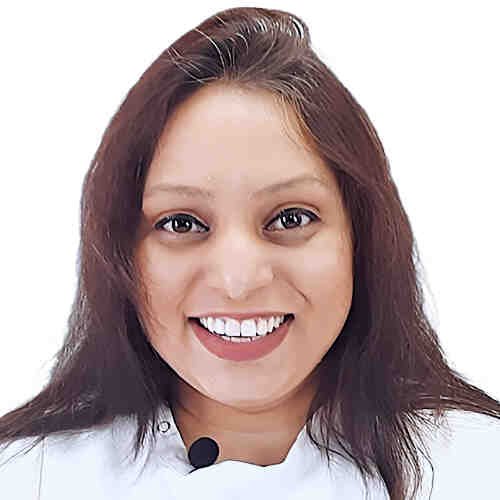
Dr. Jyoti Singh (MDS), Diplomate WCOI (Japan region) Member AAID (American Association of Implant Dentistry) stands as a beacon of excellence in implantology within Delhi NCR region. She is a BDS and MDS(Prostho) both from Maulana Azad Institute of Dental Sciences, where she secured top honors with all India rank 1 in PG entrance examination. Her extensive experience at esteemed institutions like Clove Dental and her own Center for Dental Implants & Esthetics since 2016, Dr. Singh embodies unparalleled expertise in dental implants. Boasting a wealth of 17+ years in dentistry and backed by 18 groundbreaking research papers in leading international journals (Google Scholar) and her ResearchGate profile, she epitomizes the pinnacle of proficiency and innovation in her field. She practices in Gurugram as your friendly dentist near me.