
In This Guide
Everything You Need to Know About Replacing a Missing Tooth
Jump to any section directly
Why You Must Replace a Missing Tooth
Even if it does not hurt. Even if you cannot see the gap.
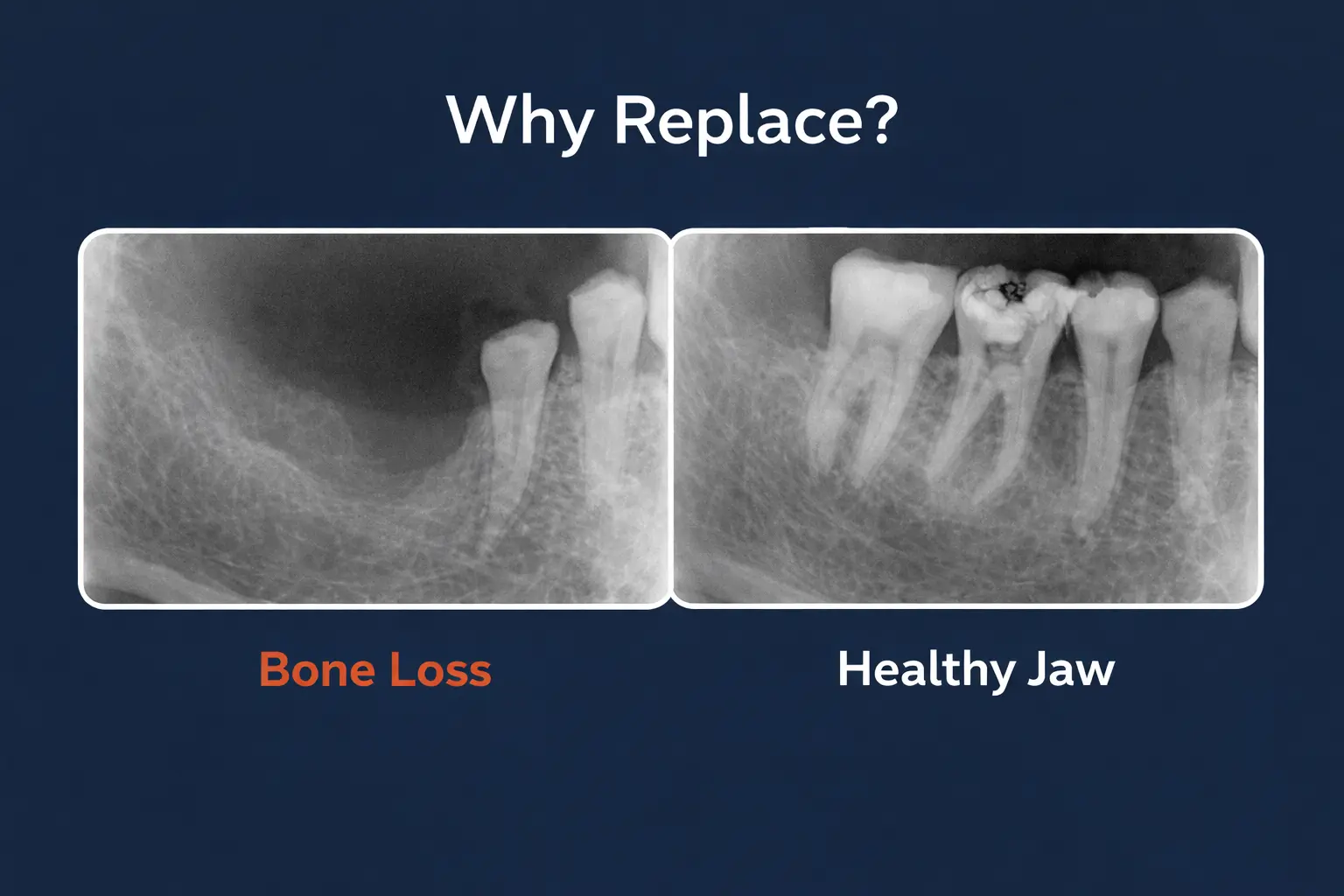
Many patients ask me — “Doctor, I lost one tooth. It is not hurting. Do I really need to do something?”
Yes. Absolutely yes.
In my clinical experience of placing over 10,000 dental implants, I have seen what happens when people wait too long. One missing tooth slowly becomes a bigger problem for the whole mouth.
Here is what happens when you leave a gap in your mouth:
- The teeth next to the gap start tilting into the empty space.
- The tooth above or below starts growing longer (called super-eruption).
- Your bite changes. You may notice jaw pain or headaches.
- Bone in that area starts melting away slowly — forever.
- Cleaning becomes harder. Decay and gum disease become more likely.
- Future treatment becomes more expensive and more complex.
The longer you wait, the fewer options you have. So let us look at all your options right now — clearly and honestly.
Also read: 10 Reasons Why Missing Teeth Should Be Replaced | How Dental Implants Stop Jawbone Loss
All 5 Options to Replace a Missing Tooth
There is no one-size-fits-all answer. But there is a best answer for most people. Let me walk you through each option — the good, the bad, and the honest truth.
Removable Partial Denture
A removable partial denture is a set of false teeth on a plastic or metal base. You wear it during the day and take it out at night.
It is the most affordable option available. But affordable does not always mean best.
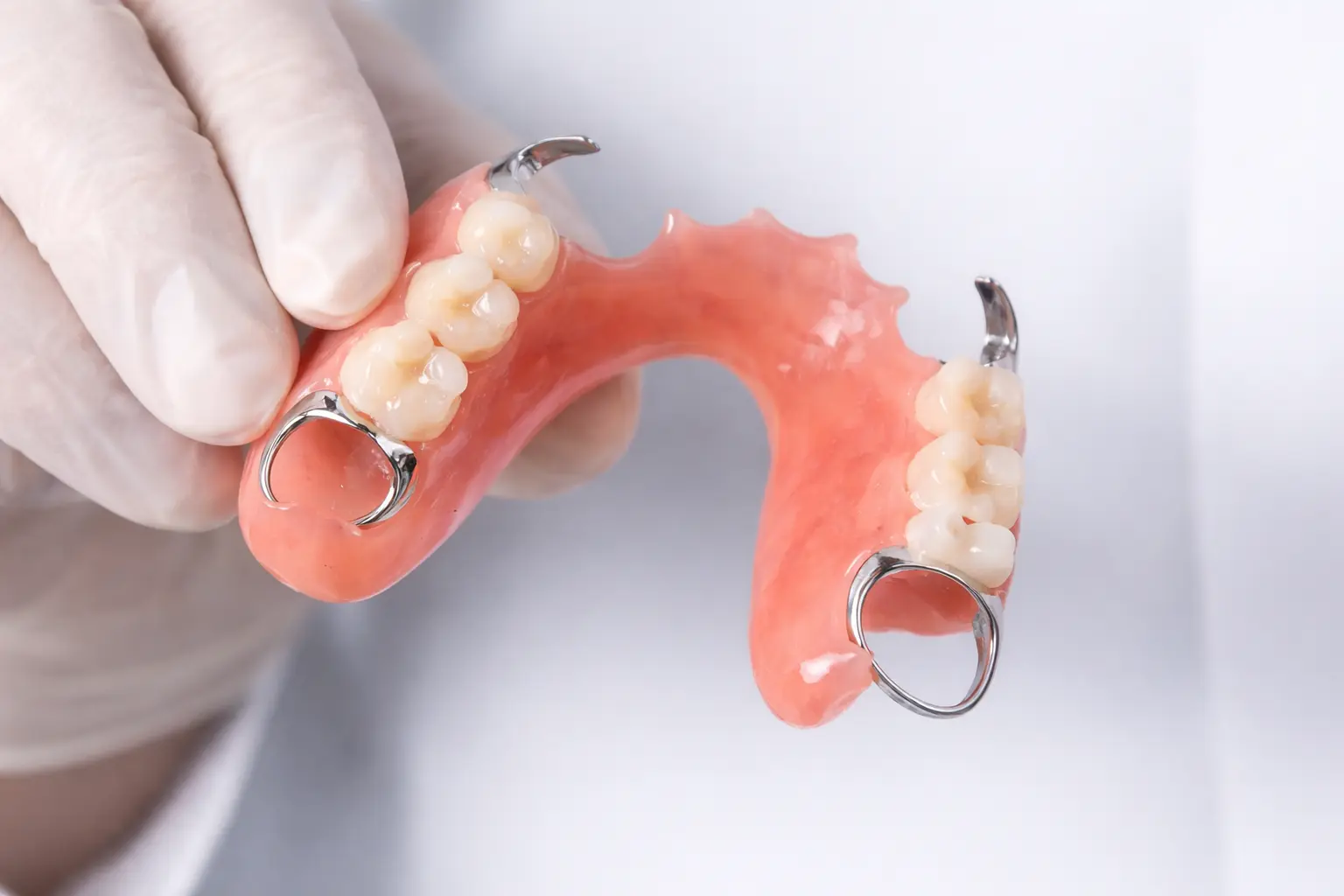
| Pros | Cons |
|---|---|
| Lowest cost option | Metal clasps can show when you smile |
| No surgery needed | Can feel loose while eating or speaking |
| No filing of adjacent teeth | Bone continues to melt away underneath |
| Can replace multiple teeth | Must be removed and cleaned daily |
| Quick to make | Needs to be replaced every 3–5 years |
See all denture options and costs: Complete Guide to Dentures in Gurgaon | Denture Cost in Gurgaon
Temporary Denture — The Flipper
A flipper is a lightweight, temporary denture. Think of it as a placeholder. It fills the gap while you wait for a permanent solution.
It is commonly used after a tooth extraction while the area is healing — for example, before an implant is placed.
| Pros | Cons |
|---|---|
| Very light and less bulky | Not durable for long-term use |
| No changes to other teeth | Can break easily if dropped |
| Good short-term cosmetic fix | Does not prevent bone loss |
| Affordable | Not suitable as a permanent replacement |
Dental Bridge — Fixed But With a Price
A dental bridge fills the gap by using the teeth on either side of the missing tooth as anchors. A false tooth hangs in the middle, “bridging” the gap.
It is a fixed option — you cannot remove it. It feels more stable than a denture.
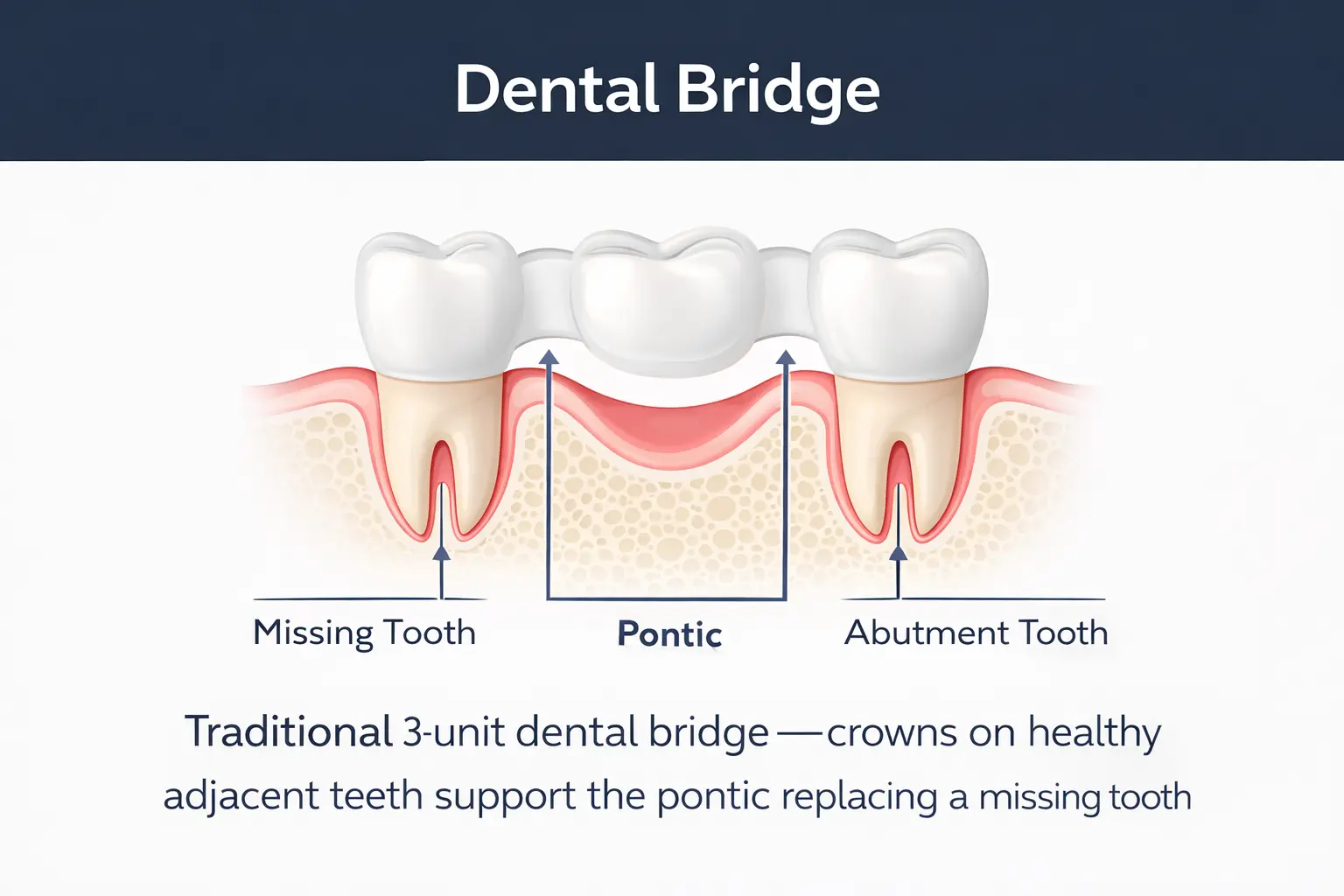
How is a Dental Bridge Made?
- 01. The two teeth on either side of the gap are filed down heavily.
- 02. An impression is taken of your teeth.
- 03. A temporary bridge is placed while the permanent one is made in the lab.
- 04. The permanent bridge is cemented in place — usually zirconia or PFM material.
| Pros | Cons |
|---|---|
| Fixed — does not move | Requires cutting down healthy teeth |
| Faster than implants | Bone loss continues underneath |
| Good cosmetic result | Harder to clean under the bridge |
| Lower cost than implant | Can fail in 7–10 years, especially in lower jaw |
| — | When bridge fails, adjacent teeth may also be damaged |
Want to know more? Read: 6 Reasons to Avoid Dental Bridges | Dental Bridge in Gurgaon — Options & Cost
Dental Implant — The Closest to a Real Tooth
A dental implant is a small titanium screw that is placed inside your jawbone. It works like the root of a natural tooth.
Think of it this way — your original tooth had a root in the bone. The implant replaces that root. A crown (tooth cap) is then placed on top. The result looks, feels, and works exactly like a natural tooth.
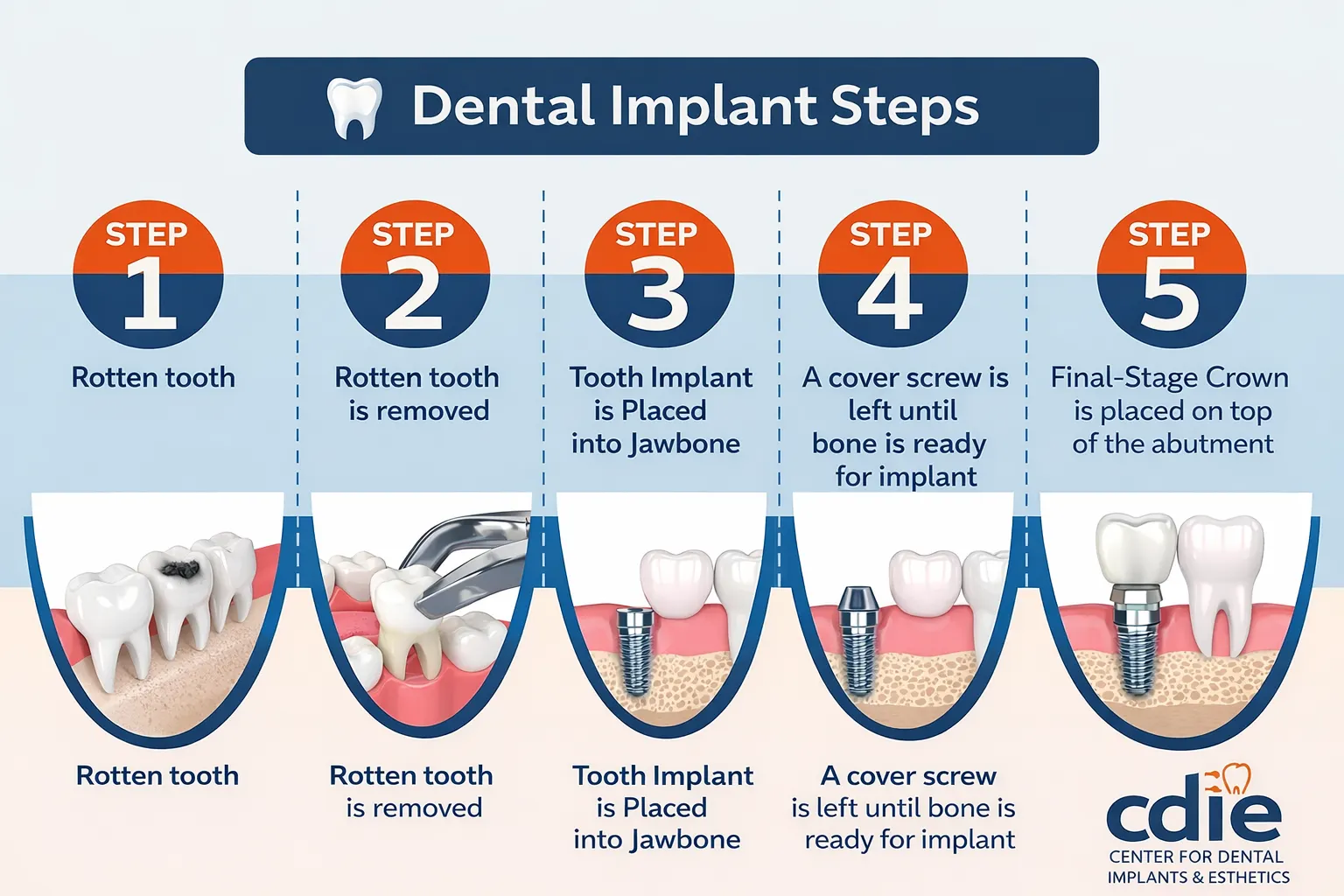
How a Dental Implant is Placed — Step by Step
Before anything, I take a 3D CBCT scan of your jaw. This tells me exactly how much bone you have, where nerves are, and whether you need a bone graft. I also check your blood tests — sugar levels, clotting time, Vitamin D, and more. I am strict about this protocol. No shortcuts.
Under local anaesthesia (you feel nothing, just some pressure), the titanium implant is placed into the jawbone. The entire procedure takes about 30–45 minutes.
The implant fuses with your bone over 3–4 months. This is called osseointegration. During this time you can have a temporary tooth placed.
Once healed, a custom-made zirconia or PFM crown is placed on top. It is matched exactly to your other teeth in shape and colour.
You eat, smile, brush, and floss normally. No one can tell the difference.
Why I Only Use US FDA-Approved Implants
At CDIE, I only place US FDA-approved, internationally certified implant systems — such as Nobel Biocare, Straumann, Zimmer Biomet, and Osstem. I am Nobel Biocare trained and a Diplomate of the World Congress of Oral Implantologists (WCOI).
In Gurgaon, many clinics offer very cheap implants using uncertified or unknown brands. These may fail within 2–3 years and can cause serious bone damage. Please ask your dentist the brand name before agreeing to any implant procedure.
| Pros | Cons |
|---|---|
| Looks and feels exactly like a real tooth | Higher upfront cost than other options |
| Prevents jawbone loss | Requires minor surgery & healing time |
| Does not damage adjacent teeth | Not suitable if significant bone loss (bone graft may be needed) |
| Lasts 20+ years with proper care | Takes 3–6 months from start to final crown |
| Easy to clean like a normal tooth | Needs a healthy general medical condition |
| No effect on adjacent teeth | — |
Learn more: Dental Implants in Gurgaon | Dental Implant Cost in Gurgaon 2026 | Single Tooth Implant Cost in India | How CBCT Scan Helps Implant Surgery
Who is a Good Candidate for Dental Implants?
- Adults with one or more missing teeth
- Patients with enough jawbone (or who can have a bone graft)
- Non-smokers or light smokers willing to quit before surgery
- Patients with controlled diabetes or blood pressure (not disqualified — just needs proper management)
- Anyone who wants a permanent, natural-feeling solution
Read: What You Must Know Before Getting Dental Implants | Can I Get Implants With Bone Loss?
Do Nothing — The Silent Damage Option
I understand. Sometimes cost is a problem. Sometimes fear stops people. Sometimes people just think — “it is just one tooth, I will manage.”
But here is what is actually happening inside your mouth while you “do nothing.”
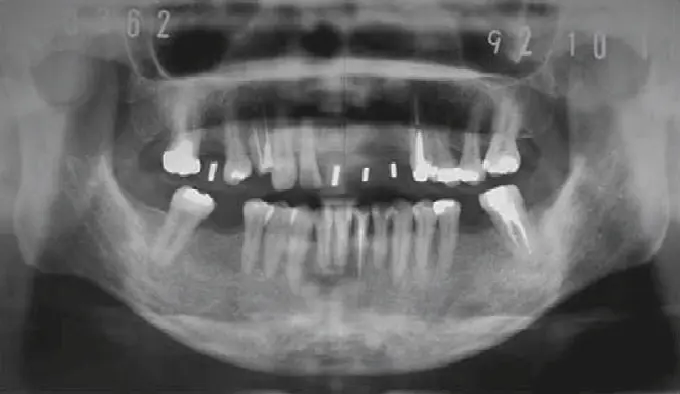
Cost Comparison Table 2026 — Gurgaon & Delhi-NCR
Here is an honest, current cost breakdown. Prices can vary based on brand, material, bone condition, and complexity. This gives you a fair idea to plan.
| Option | Approx. Cost (INR) | Durability | Bone Loss Prevention | Our Rating |
|---|---|---|---|---|
| Removable Partial Denture | ₹8,000 – ₹15,000 | 3–5 years | No | 2/5 |
| Temporary Denture (Flipper) | ₹3,000 – ₹7,000 | 6–12 months | No | 1/5 (Temp only) |
| Dental Bridge — PFM (3-unit) | ₹18,000 – ₹25,000 | 7–12 years | No | 2.5/5 |
| Dental Bridge — Zirconia (3-unit) | ₹28,000 – ₹40,000 | 10–15 years | No | 3/5 |
| Dental Implant (Nobel/Straumann) | ₹35,000 – ₹70,000 | 20+ years | Yes | 5/5 |
| Do Nothing | ₹0 now, but thousands later | Causes damage | No | 0/5 |
*Prices are indicative for Gurgaon & Delhi-NCR region in 2026. Final cost depends on bone quality, implant brand, and additional procedures like bone graft or sinus lift. Please consult for exact pricing.
For detailed pricing: Dental Implant Cost in Gurgaon | Truth Behind Cheap ₹9,999 Implant Offers
Which Option is Best for You?
I know all these options can feel overwhelming. So let me make it simple for you.
Compare in detail: Dental Implants vs Dentures — Which is Better? | Why Implant Bridges Beat Dentures | Choosing the Right Dental Prosthesis
Myth vs. Fact — Things Patients Often Believe
“Implant surgery is very painful.”
The surgery is done under local anaesthesia. Most patients say it was much easier than a tooth extraction. Post-surgery discomfort is managed with basic pain medication for 2–3 days.
“One missing tooth does not matter much.”
One missing tooth begins a chain reaction — bone loss, shifting teeth, bite problems, and decay. The damage silently grows over months.
“A bridge is safer because it is not surgery.”
A bridge permanently damages two healthy teeth. If the bridge fails later, all three involved teeth are at risk. Long-term, it is actually more damaging.
“Cheap implants at ₹9,999 are the same as branded ones.”
Cheap implants often use uncertified materials and fail earlier. Once a cheap implant fails, the bone damage can be severe and corrective treatment costs far more. Read the full truth here.
We Serve Patients Across Gurgaon & Delhi-NCR
Our two clinics in Gurgaon see patients every day from across the region. Wherever you live in Gurgaon or Delhi-NCR, you are close to expert implant care.
CDIE — Sector 51, Gurgaon
Nearby Areas: Sector 49, Sector 50, Sector 52, Sohna Road, South City, Omega, Unitech City, Nirvana Country, Ansal Sushant Lok, Baadshahpur
CDIE — Sector 74, Gurgaon
Nearby Areas: Sector 73, Sector 75, Sector 76, Sector 82, Sector 83, New Gurgaon, Palam Vihar, Dwarka Expressway, DLF Gardencity, Heritage City
FAQs — Patients Ask, I Answer
Real questions from real patients I see every week in Gurgaon.
Short answer: Your jawbone starts melting and your teeth start shifting — silently, without pain.
Research shows bone loss begins within days of a tooth removal. Within 6 months, up to 25% of bone width can be lost.
Neighbouring teeth tilt into the gap. The tooth above or below grows longer. Cleaning becomes harder and decay follows.
The longer you wait, the more expensive and complex the correction becomes.
Short answer: No. The surgery is done under local anaesthesia. You feel pressure but no pain.
In my clinical experience, patients are almost always surprised at how comfortable the procedure is. After the surgery, mild soreness lasts 2–3 days and is managed well with basic pain medication. Most patients are back to their normal routine the next day.
Short answer: A single dental implant at CDIE Gurgaon costs approximately ₹35,000 to ₹70,000 depending on the implant brand and materials.
This includes the titanium implant, abutment, and zirconia crown. Nobel Biocare and Straumann implants are at the higher end.
The cost also depends on whether bone grafting is needed. We offer EMI options. Please visit us for a personalised estimate after a CBCT scan.
Short answer: With proper care, a dental implant can last 20–25 years or even a lifetime.
The titanium implant itself integrates with your bone permanently. The crown on top may need replacement after 10–15 years due to wear.
Using certified brands like Nobel Biocare or Straumann significantly increases long-term success. Regular check-ups and good oral hygiene are essential.
Short answer: No. In almost all cases, a dental implant is a much better long-term choice.
A bridge requires permanently filing down the two healthy teeth on either side. It also does not stop jawbone loss underneath.
A bridge typically lasts 7–12 years. When it fails, the adjacent teeth can also be damaged — meaning you may lose three teeth because of one gap.
An implant protects the bone, leaves adjacent teeth completely untouched, and can last a lifetime. I recommend bridges only when implants are genuinely not possible.
Short answer: Yes, often yes — but a bone graft may be needed first.
If significant bone loss has occurred, bone grafting rebuilds the jawbone before the implant is placed. This adds some cost and healing time but makes placement possible for most patients.
I use CBCT scanning to assess exact bone volume. Even after 5–10 years of a missing tooth, many patients can still get implants with the right approach.
Come in for a consultation. We give you an honest assessment — no pressure.
Read: Can I Get Implants With Bone Loss? | Bone Grafting for Implants
Short answer: Cheap implants often use uncertified materials that fail early and cause serious bone damage.
When an uncertified implant fails, it destroys surrounding bone. The corrective treatment then costs far more than a proper implant would have.
Always ask your dentist the brand name of the implant before you say yes. At CDIE, we use only US FDA-approved systems. The few thousand rupees saved today can cost you lakhs later.
Short answer: Bone loss starts within days. Significant changes happen by 3–6 months. After a year, complications multiply.
There is no “safe” waiting window. Bone loss begins almost immediately after extraction.
Within 3 months, you lose measurable bone width. Within 6–12 months, adjacent teeth start shifting. After 1–2 years, getting an implant may need bone grafting or a sinus lift — increasing cost and time significantly.
The right time to act is now, or as soon as medically possible after extraction.
Short answer: A removable partial denture is the lowest upfront cost — but not cheap in the long run.
A removable denture costs ₹8,000–15,000. A flipper costs ₹3,000–7,000. Both need replacement every 3–5 years and do nothing to stop bone loss.
A dental implant at ₹35,000–70,000 lasts 20+ years with no ongoing replacement cost. Over 10 years, the implant often works out cheaper.
I always advise patients to think of it as a one-time investment, not just a cost today.
Short answer: Yes. A dental implant is the only option that does not involve adjacent teeth at all.
A bridge requires permanently filing the two teeth on either side — even if they are perfectly healthy. A denture may use clips that touch adjacent teeth.
An implant stands completely independently in the bone, just like a natural tooth root. No neighbour is touched. No neighbour is damaged.
This is why I always recommend implants when the teeth on either side of the gap are healthy.
Short answer: In some cases, yes — an immediate implant with a temporary crown can be placed the same day as extraction. The final crown comes after 3–4 months of healing.
Immediate implant placement is possible when bone quality and quantity are sufficient. I confirm this with a CBCT scan before deciding.
A temporary crown is placed so you leave the clinic with a tooth the same day. The permanent zirconia crown is fitted after healing.
Not every patient is a candidate. Patients with active infection, poor bone, or uncontrolled systemic conditions need a staged approach for safety.
Short answer: CDIE has two clinics in Gurgaon — Sector 51 (South Gurgaon) and Sector 74 (New Gurgaon). Both are accessible from all major areas of Gurgaon and Delhi-NCR.
If you live in or near Sohna Road, DLF, Golf Course Road, MG Road, Sector 49, 50, 52, Nirvana Country, South City, Ansal Sushant Lok, Baadshahpur — our Sector 51 clinic is closest to you.
If you live near Palam Vihar, Dwarka Expressway, Sector 73–89, New Gurgaon, Manesar, Heritage City, DLF Garden City — our Sector 74 clinic is your best option.
Patients from South Delhi, Faridabad, and Noida also travel to us for specialist implant care. Call or WhatsApp us on +91 98716 31066 to book a consultation at either clinic.
Short answer: With FDA-approved implants and proper protocol, success rates are 95–98% over 10 years.
Three things determine success: implant brand and quality, surgeon’s skill and protocol, and patient’s health and aftercare.
At CDIE, we use only internationally certified implant systems. We perform mandatory CBCT scanning and blood testing before every surgery.
In my 20+ years of practice and 10,000+ implants placed, our outcomes match global benchmarks. The biggest threat to success in India is poorly certified implants placed without proper assessment — increasingly common with the rise of low-cost chains.
Tooth Position Matters
Missing a Front Tooth vs a Back Tooth
The position changes the visual priority — not the medical urgency.
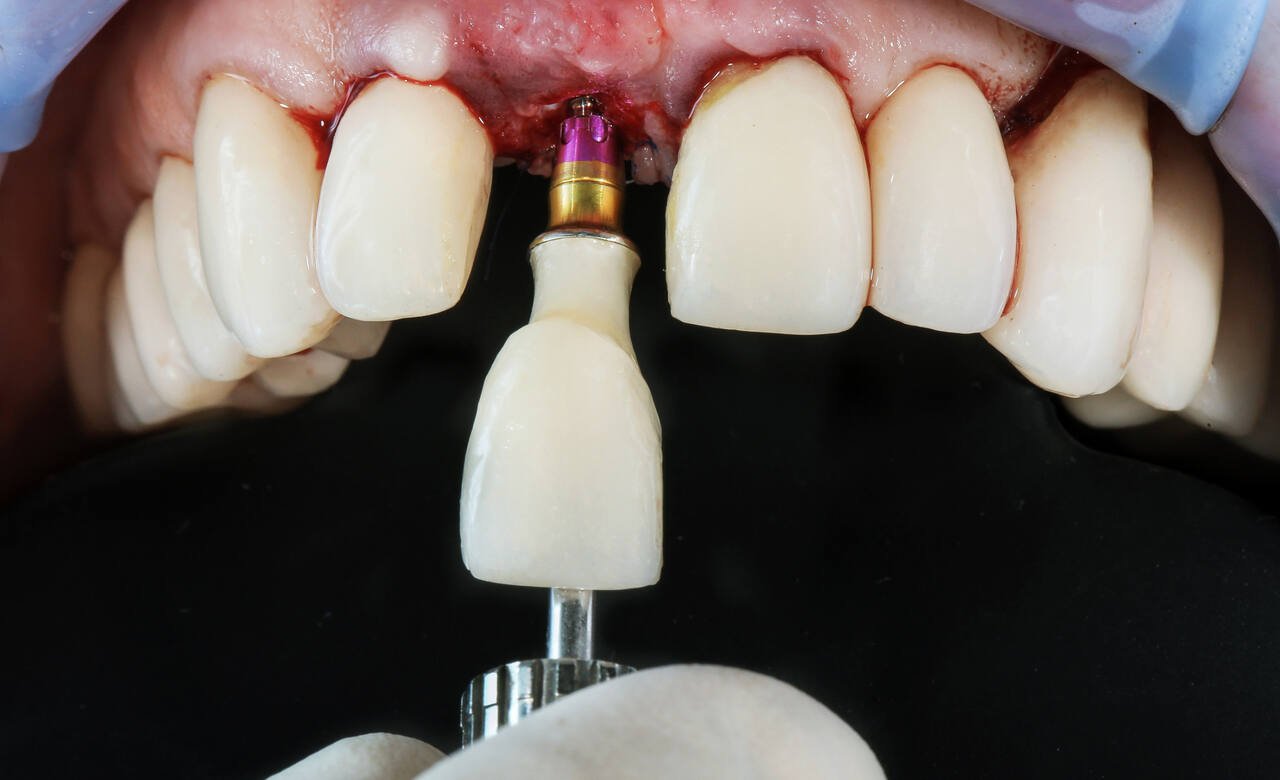
Visible immediately. Affects your smile, speech, and confidence. A zirconia implant crown matches your other teeth exactly in colour and shape — no one can tell the difference.
A denture or bridge for a front tooth always shows and compromises neighbouring teeth. An implant is almost always the right answer.
“No one can see it” — but your other teeth can feel it. A missing molar shifts chewing load onto remaining teeth, causing cracks and pain over time. Bone loss here is also the fastest.
A molar implant is hidden when you smile but restores full chewing power. Patients notice the difference immediately with hard foods.
Emergency Guide
My Tooth Just Fell Out — What Do I Do Right Now?
Act fast. The first 30 minutes matter the most.
If an adult tooth has fallen out due to an accident or injury, there is a small window to potentially save it. Here is what to do immediately.
If the tooth cannot be saved — do not panic. A dental implant in Gurgaon can replace it permanently and give you a result that looks and feels completely natural.
Common Patient Questions
Special Cases — Can I Still Get a Tooth Replaced?
Most patients who think they cannot, actually can.
I Have Diabetes
Yes, with well-controlled sugar (HbA1c below 7.5) you can safely get implants. We check blood reports before every surgery — this is non-negotiable at CDIE.
I Have Multiple Missing Teeth
- 2–3 teeth: Individual implants or implant bridge
- One full jaw: All-on-4 or All-on-6
- Full mouth: Full mouth implants
I Have Significant Bone Loss
In most cases, yes. Bone grafting rebuilds the jaw first. For upper jaw, a sinus lift may be needed. The CBCT scan tells us exactly what is required.
I Am Scared of Surgery
Implant surgery is done under local anaesthesia. You feel pressure, not pain. Sedation is also available for very anxious patients.
In my 20+ years of practice, the most nervous patients are often the most surprised at how easy it was.
Why Patients Choose Us
Why Patients Across Gurgaon & Delhi-NCR Choose CDIE for Missing Tooth Replacement
Here is what sets us apart — in plain, honest words.
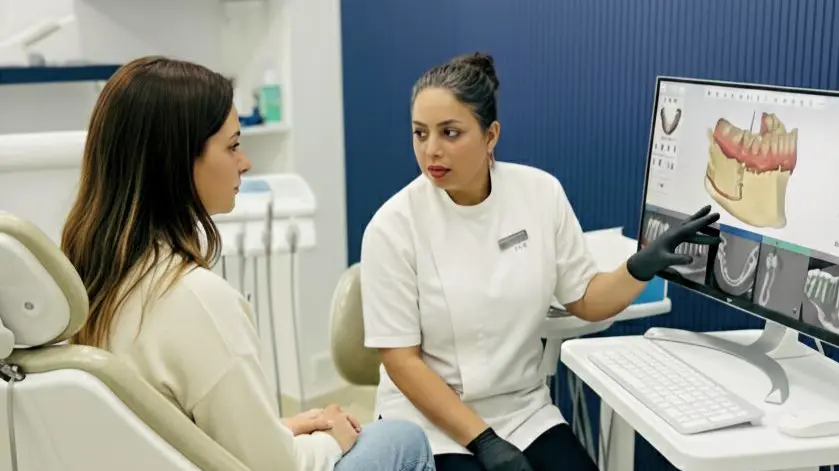
Dr. Jyoti Singh has placed over 10,000 dental implants. This is not a number from a pamphlet — it is from two decades of daily clinical practice in Gurgaon.
No implant is placed at CDIE without a full CBCT scan and blood tests. This is our standard, not an upsell. It is how we ensure safe, accurate treatment every single time.
We use Nobel Biocare, Straumann, Zimmer Biomet, and Osstem — internationally certified brands with proven long-term success records. Never unknown brands.
Sector 51 for patients from South Gurgaon, Sohna Road, Faridabad side. Sector 74 for patients from New Gurgaon, Dwarka Expressway, Palam Vihar, and Delhi side.
Every week, patients come to us from Sector 49, Sector 50, Sector 56, Golf Course Extension Road, Southern Peripheral Road (SPR), Vatika India Next, Malibu Towne, Ansal Sushant Lok for missing tooth treatment near them in South Gurgaon.
From the newer parts of Gurgaon — Sector 73, Sector 82, Sector 83, Sector 84, Sector 89, Manesar, Palam Vihar, Dwarka Expressway corridor, DLF Garden City, Heritage City, Karan Vihar — patients find our Sector 74 clinic the most convenient.
We also regularly see patients travelling from South Delhi (Vasant Kunj, Saket, Hauz Khas), Faridabad, Noida, and Bahadurgarh who specifically want an experienced implant specialist and are willing to make the trip to Gurgaon for the right treatment.
If you have been searching for “single tooth replacement near me Gurgaon”, “best implant dentist Gurgaon”, or “missing tooth treatment Gurugram” — you have found the right place. Send us a WhatsApp and let us help you get started.
See our clinics: Dental Clinic Sector 51 Gurgaon | Dental Clinic Sector 74 Gurgaon | Meet Dr. Jyoti Singh — Best Implantologist Gurgaon
Ready to Replace Your Missing Tooth?
Come in for a free CBCT-based implant assessment. Know exactly what your bone looks like and what your best option is — no pressure, no guessing.
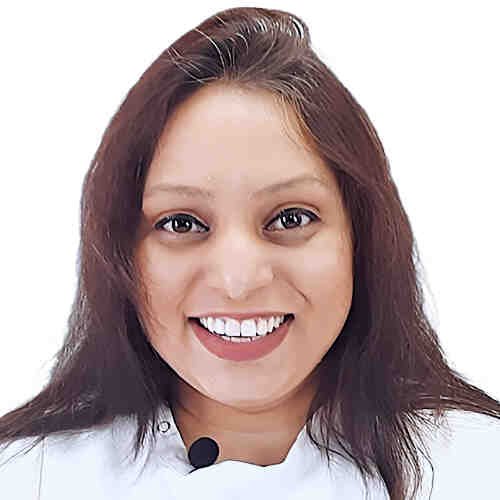
Dr. Jyoti Singh (MDS), Diplomate WCOI (Japan region) Member AAID (American Association of Implant Dentistry) stands as a beacon of excellence in implantology within Delhi NCR region. She is a BDS and MDS(Prostho) both from Maulana Azad Institute of Dental Sciences, where she secured top honors with all India rank 1 in PG entrance examination. Her extensive experience at esteemed institutions like Clove Dental and her own Center for Dental Implants & Esthetics since 2016, Dr. Singh embodies unparalleled expertise in dental implants. Boasting a wealth of 17+ years in dentistry and backed by 18 groundbreaking research papers in leading international journals (Google Scholar) and her ResearchGate profile, she epitomizes the pinnacle of proficiency and innovation in her field. She practices in Gurugram as your friendly dentist near me.