Self-Ligating Braces vs Conventional Braces: Which One Is Right for You?
Both straighten your teeth well. The real question is which one fits your visits, your comfort and your budget. Dr Jyoti Singh (MDS Orthodontist, 17+ years) breaks it down with honest facts, not sales talk.
What Is the Real Difference Between Self-Ligating and Conventional Braces?

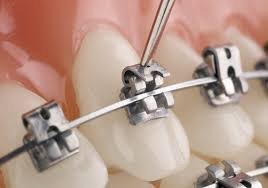
Both braces move your teeth using a metal wire, called an archwire. The wire sits inside a small metal or ceramic piece glued to your tooth, called a bracket. The only real difference is how the bracket holds this wire in place.
Conventional braces need a small elastic ring or thin metal wire, called a ligature, tied around each bracket to hold the archwire. Think of it like tying a shoelace on every single bracket, one by one.
Self-ligating braces have a tiny built-in door or clip on the bracket itself. It clicks shut over the wire. No separate tie needed. It works more like a snap-lock lid on a box, you just press it shut.
This one design change affects how often you visit the clinic, how much friction the wire creates while sliding, and how easy the braces are to clean. We cover each of these honestly below, using real research, not just marketing language.
Does Self-Ligating Really Finish Treatment Faster?
Almost every clinic website says self-ligating braces are faster. We decided to actually check what the published research says, because our patients deserve a straight answer, not a sales line.
What the research actually found
A systematic review published in the Journal of Orofacial Orthopedics looked at multiple controlled clinical trials comparing both bracket types. It found no significant difference in the total number of clinic visits or overall treatment duration between self-ligating and conventional braces.
A separate meta-analysis in Dental Cadmos reviewed three randomised trials directly comparing treatment time. In all three studies, self-ligating braces did not finish meaningfully faster once the full course of treatment was measured.
Where self-ligating does have a genuine edge
Lab studies do show something real. Self-ligating brackets create less friction against the wire, especially in the early stage when thin, flexible wires are used to start moving crowded teeth. This can make the first few months feel smoother.
This friction advantage becomes smaller once treatment moves to thicker steel wires later on. So the benefit is real, but it is early-stage and gradual, not a dramatic shortcut to a finished smile.
In my clinical experience, says Dr Jyoti Singh, patients who hear “you’ll finish faster” and then don’t, often feel let down halfway through treatment. We would rather tell you honestly what changes, fewer visits and smoother early movement, and what does not change much, the total months of treatment.
Self-Ligating vs Conventional Braces: Full Comparison
| Aspect | Self-Ligating Braces | Conventional Braces |
|---|---|---|
| How the wire is held | Built-in clip on the bracket, no tie needed | Elastic or metal ligature tied on each bracket |
| Adjustment visits | Usually every 6–8 weeks | Usually every 4 weeks |
| Early-stage friction | Lower, smoother early tooth movement | Slightly higher with thin wires |
| Total treatment time | No proven difference on average, per research | No proven difference on average, per research |
| Oral hygiene | Fewer parts, generally easier to clean around | Needs extra care brushing around ties |
| Emergency repair visits | Lower risk, nothing to break loose | Ligature can loosen or snap, may need a repair visit |
| Complex crowding or rotation cases | Can manage most complex cases well | Also manages most cases, sometimes needs closer monitoring |
| Appearance | Slightly lower profile, fewer visible parts | Ties add a bit more visible detail |
| Starting cost | Carries a cost premium, see our braces cost guide | Generally the lower starting option, see our braces cost guide |
Where Conventional Braces Still Win
We believe openness about pricing and honest limits builds real trust. Self-ligating is not automatically the “better” choice for every patient. Here is where conventional braces genuinely hold their ground.
- Lower starting cost. Conventional braces cost less to begin treatment, a real factor for many families in Gurgaon.
- No proven speed guarantee for self-ligating. As the research above shows, paying more does not guarantee a shorter total treatment.
- Skilled hands matter more than the bracket type. An orthodontist’s experience in wire selection and adjustment timing affects your result more than which bracket system is used.
- Both are equally proven treatments. Conventional braces have decades of clinical evidence behind them and remain a completely reliable choice.
A simple way to picture it
Think of conventional braces like a phone with a screen protector you replace every month. It works fine, just needs a little more maintenance. Self-ligating is like a phone with a built-in scratch-resistant screen, less upkeep, but the phone itself still does the same job.
Which One Is Right for You?
There is no single “better” braces type. The right one depends on your schedule, your case and what matters most to you. Here is how Dr Jyoti Singh guides patients through this choice at our Gurgaon clinics.
Best for Busy Professionals
If taking time off work every 4 weeks is hard, fewer visits genuinely help.
- Visits spaced 6–8 weeks apart
- Lower chance of an unplanned repair visit
- Good fit for Gurgaon’s working crowd near Golf Course Road and Cyber City
Best for Complex Crowding Cases
Self-ligating gives finer control during difficult tooth rotation and crowding correction.
- Smoother early-stage movement with less friction
- Useful where precise, gradual force is needed
- Case is assessed on your CBCT scan first
Best If Budget Is the Priority
Conventional braces give the same core result at a lower starting cost.
- Decades of proven clinical results
- No compromise on final outcome
- EMI options available on request
Can You Switch From Conventional to Self-Ligating Mid-Treatment?
Technically yes, but it is not something we recommend without a real clinical reason. Switching means removing all existing brackets and rebonding new ones, which adds extra chair time and extra cost.
We do sometimes recommend a switch if a patient keeps having ligature problems, repeated loosening or breakage, or if the case plan changes midway. This is always decided after checking your progress, not as a routine upgrade sell.
Frequently Asked Questions
What is the main difference between self-ligating and conventional braces?
- Self-ligating brackets have a built-in clip that holds the wire, no tie needed.
- Conventional brackets need a separate elastic or metal tie, called a ligature.
- Both use the same wire-and-bracket system underneath.
Do self-ligating braces really finish treatment faster than conventional braces?
- No proven difference on average, according to systematic reviews of clinical trials.
- Self-ligating does show lower friction in early stages, which can feel smoother.
- Total treatment months depend more on case complexity than bracket type.
Are self-ligating braces more painful or less painful than conventional braces?
- Research shows pain levels are largely similar between both types.
- Some patients report a slightly smoother feel with self-ligating in the first weeks.
- Mild soreness for 2 to 3 days after any adjustment is normal for both.
How many clinic visits do self-ligating braces need compared to conventional braces?
- Self-ligating visits are usually spaced 6 to 8 weeks apart.
- Conventional braces usually need a visit every 4 weeks to change the tie.
- For an 18-month treatment, this can mean roughly 9–12 visits versus 18 visits.
Can self-ligating braces treat complex crowding or bite cases?
- Yes, self-ligating systems handle most complex crowding and rotation cases well.
- Conventional braces also treat complex cases, sometimes with closer monitoring.
- Your CBCT scan and bite check decide the right system, not the marketing claim.
Is oral hygiene easier with self-ligating braces?
- Generally yes, fewer parts means fewer places for food to trap.
- Conventional braces need extra care brushing around the ligature ties.
- Both still need daily brushing and flossing with an orthodontic brush.
Can I switch from conventional to self-ligating braces mid-treatment?
- Yes, but it means removing and rebonding all brackets, which adds cost and time.
- We only recommend it for a real clinical reason, like repeated tie breakage.
- Not something we push as a routine mid-way upgrade.
Which type of braces costs more, self-ligating or conventional?
- Self-ligating braces carry a cost premium over conventional braces.
- Conventional braces are usually the lower starting-cost option.
- See our complete braces cost breakdown for exact ranges.
Are self-ligating braces available in a ceramic, tooth-coloured option?
- Yes, ceramic self-ligating brackets are available and blend closer to natural tooth colour.
- They cost more than metal self-ligating brackets.
- Ceramic options are covered in detail on our self-ligating braces page.
How do I know which braces are right for my case?
- Start with a CBCT scan and bite assessment at the clinic.
- Dr Jyoti Singh reviews crowding severity, budget and your visit availability together.
- You get a clear, honest recommendation, not the costlier option by default.
Ready to Find Out Which Braces Suit You?
Sector 51 Clinic
Center for Dental Implants & Esthetics
#166, Sector 51, (Ambedkar Chowk), Close to Artemis Hospital, Gurgaon, Haryana 122003
Sector 74 Clinic
Center for Dental Implants & Esthetics
R1 – 257, 2nd Floor, M3M Cornerwalk, Sector 74, Gurugram, Haryana 122004
Read Further
What Does Braces Treatment Actually Cost in Gurgaon?
See the full price breakdown across metal, ceramic and self-ligating options, with no hidden charges.
Check braces cost in GurgaonCurious About Damon Self-Ligating Braces Specifically?
A closer look at the Damon system, one of the most used self-ligating brands at our clinics.
Explore Damon braces benefitsNot Sure If You Even Need Braces?
Compare braces against clear aligners to see which fits your lifestyle and case better.
Compare braces vs clear aligners
Dr. Jyoti Singh (MDS), Diplomate WCOI (Japan region) Member AAID (American Association of Implant Dentistry) stands as a beacon of excellence in implantology within Delhi NCR region. She is a BDS and MDS(Prostho) both from Maulana Azad Institute of Dental Sciences, where she secured top honors with all India rank 1 in PG entrance examination. Her extensive experience at esteemed institutions like Clove Dental and her own Center for Dental Implants & Esthetics since 2016, Dr. Singh embodies unparalleled expertise in dental implants. Boasting a wealth of 18+ years in dentistry and backed by 18 groundbreaking research papers in leading international journals (Google Scholar) and her ResearchGate profile, she epitomizes the pinnacle of proficiency and innovation in her field. She practices in Gurugram as your friendly dentist near me.